Paper Soup Containers
Disposable Soup Container
Paper Soup Containers

26 oz Paper Soup Containers With Lids | Catering

Catering-ready 26 oz paper soup containers with vented paper, PET or PLA lids. Stackable, 100°C hot-fill, up to 7-colour print, 50,000 pcs MOQ.
Brand Name: SYTAI
Place of Origin: CHINA
Type: Bowl
Plastic Type: PE
Style: Single Wall
Material: Paper
Use: Food
Quantity
Minimum order quantity:50000pieces
Inquiry now
 

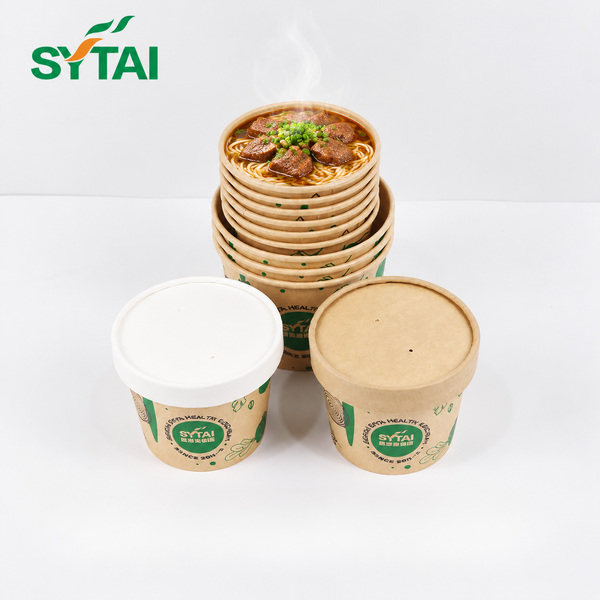
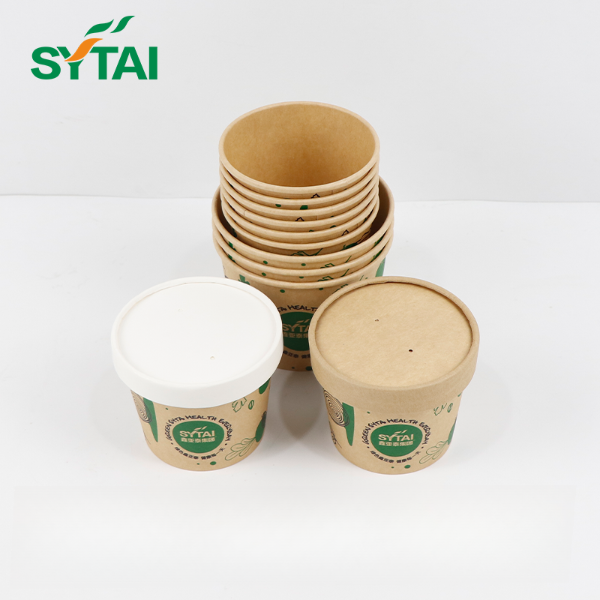
26 oz Paper Soup Containers With Lids  

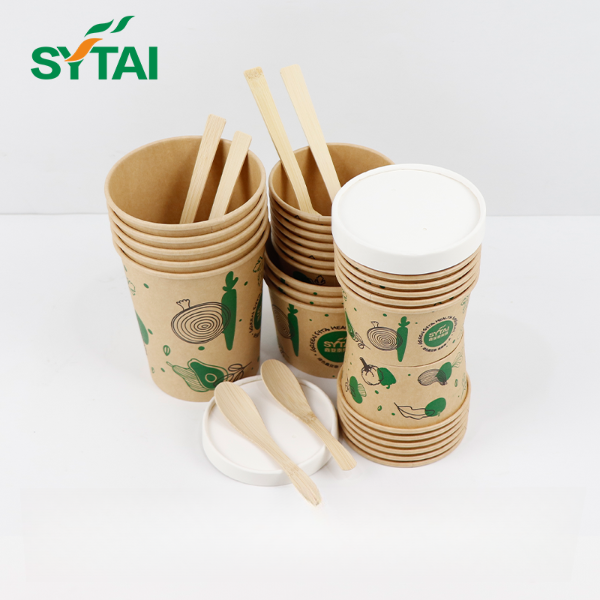
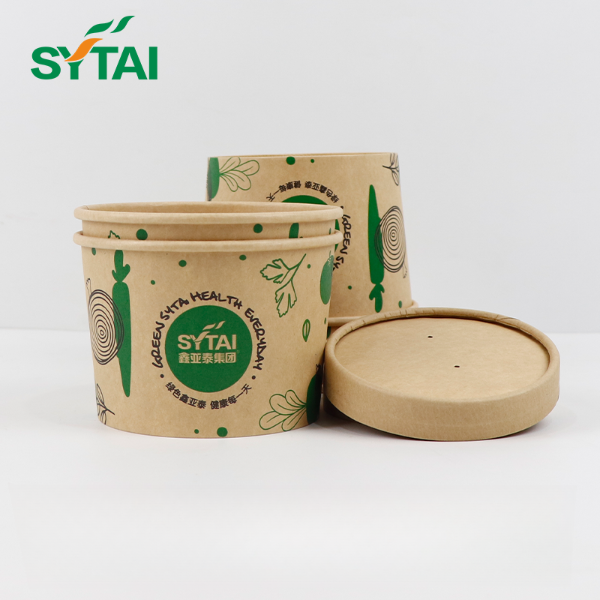
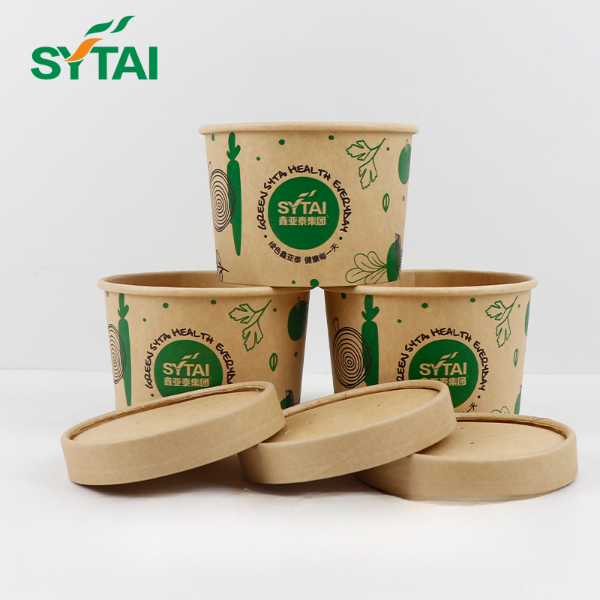
These 26 oz (approx. 780 ml) paper soup containers come with lids and are crafted from a single
layer of food-grade paperboard. The interior can be lined with either PE or PLA.
They are compatible with a variety of lids—including breathable paper lids, transparent PET lids,
or eco-friendly PLA/CPLA lids—making them ideal for serving thick soups, porridge, noodle soups, chili, stews,
and saucy side dishes. They are well-suited for catering companies,
central kitchens, buffet operations, meal services for hospitals and schools, event catering, and Chinese-style takeout.
For procurement teams, a key practical advantage lies in the system’s compatibility:
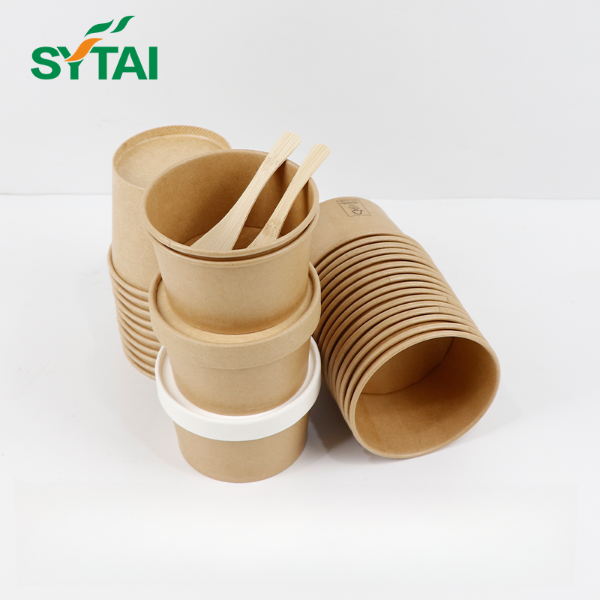
the same series of containers, lids, cup carriers, and sealing equipment can be used across different sizes,
eliminating the need to purchase new hardware when adding a new capacity option.
Furthermore, the printing layout shares the same die-cut specifications as the 16 oz version,
ensuring a consistent visual identity for bundled meal sets while preventing an unnecessary proliferation of SKUs in the warehouse.

Paper Soup Containers with Lids:

Leak-resistance Is Determined by a Chain of Three Key Dimensions

The first issue is the rolled edge. A perfectly rolled edge, formed in one piece, ensures even pressure
distribution along the entire circumference of the lid. If the rolled edge is off-center,
one side will reach the bottom first when the lid is pressed down, leaving the other side suspended.
A 30° tilt will cause leakage from the opposite side – this is the most common reason for"the cup seems fine but it leaks."
The second issue is the locking depth. The locking depth of the inner lid clips should be an
interference fit with the outer diameter of the cup opening, expanding first and then springing back when pressed down.
The third issue is the negative pressure after hot filling. When hot soup is filled, the lid is closed,
and then the cup cools down, a negative pressure will form inside. A flat lid will be sucked inwards,
causing the sealing ring to detach from the cup opening. For soups and porridges with fillings,
it is recommended to choose a vented lid with a vent hole (vented paper lids and perforated CPLA lids are available at the station),
allowing the pressure difference to be released through the vent,
rather than relying on a thicker lid to withstand the pressure.
Lid TypeConstructionBest ForCatering Fit
Vent-hole paper lidAll-paper construction, vent holes punched in the lid panel, full-surface printing availableDine-in takeaway, short-distance delivery, stacking of lidded cupsHigh — cup and lid can enter the paper recycling stream together
Clear PET lidTight snap fit, contents visible, cold-resistantDisplay-style plating, cold soups and desserts, supermarket chillersMedium — heat resistance must be confirmed before use with hot soup
PLA / CPLA lid (vented)Plant-based material, vented design, compostable pathwayCatering operators and chain HQs with composting requirementsHigh — pairs with PLA-lined cups as a complete set

Disposable Soup Container:

How to choose between PE, PLA and Bio-PBS

For the very same disposable soup container,
simply changing the type of interior lining (coating) results in significant differences in cost,
temperature resistance, and regulatory compliance. All three options are standard,
readily available choices on our platform:
 
Liner OptionWater & Grease ResistanceHeat ResistanceEnd-of-Life PathBest-Fit MarketsRelative Cost
PE (standard)Reliable; suitable for both hot and oily soupsRated −20°C to 100°C on our product pagesPaper recycling stream (subject to local facilities)Global, best valueBaseline
PLA (plant-based)Reliable; acidic soups require a sample testHot-fill recommended below 90°CIndustrial composting; available with an EN 13432 certification pathwayEU and markets with composting infrastructureHigher than PE
Bio-PBS (bio-based)Reliable; good oil resistanceSuitable for standard hot fillingBiodegradable; must be verified against the target market's standardJapan and selected Asia-Pacific marketsHigher than PE

Takeout Soup Containers:

For group meals and food delivery scenarios

Group Catering and Event Dining. For buffet lines, wedding banquets, conference coffee breaks, sporting events,
and trade shows, soup is typically prepared in individual portions.
The 26 oz paper soup containers addresses the growing demand for"extra portions without extra packaging"—the
soup is served in a separate cup, while the main course is packed in a separate container;
the entire set can then be placed directly into a thermal holding unit for delivery.
Central Kitchens and Satellite Kitchens. The core of cost-efficiency in group catering lies in centralized preparation
followed by distribution to various service points. The 26 oz disposable soup container is ideal for a"pre-portioned,
reheat-on-site"workflow: items are portioned and transported under refrigeration or freezing,
then reheated at the service point and served directly in the cup—eliminating the need for large soup vats or secondary transfers on-site.
Two points to note: the rigidity of the paper cup may decrease slightly after refrigeration,
so the number of stacked units should be reduced; when reheating,
use a vented lid to allow steam to escape and prevent the lid from being pushed off.
Food Delivery and Cloud Kitchens. For long-distance delivery, a three-part setup is recommended: a leak-proof lid,
a tamper-evident seal, and a four-cup carrier. In delivery orders, 26 oz paper soup containers are frequently used
for"add-on soup"in family-style meals or as a"larger portion"option for individual orders (serving as a single-cup alternative to two 16 oz cups).
During transport, the containers should be kept upright or at a slight angle; placing them horizontally
causes the liquid to press against the thinnest part of the lid’s edge for an extended period, increasing the risk of leakage.
Retail and Convenience Stores. These containers are suitable for ready-to-eat chilled soups, *oden* (Japanese-style simmered dish) broth,
or pre-portioned meal components. They can be paired with transparent PET lids for visual display,
or paper lids that offer space for full-surface printing—useful for pricing or labeling. For cold-chain applications,
it is essential to verify the container’s performance regarding low-temperature tolerance and condensation;
results from hot-soup testing should not be assumed to apply directly to cold-storage conditions.
 

Paper Soup Containers:FAQ

Will the containers soften or become too hot to hold when filled with soup above 90°C?
This product series is rated for a temperature range of -20°C to 100°C and will not
soften when filled with hot liquids at room temperature. However, if a container is filled to capacity with liquid above 90°C,
the outer wall will heat up quickly. For bulk catering services, we recommend using corrugated sleeves rather than simply
opting for thicker cup walls—this is more cost-effective and provides more direct protection against heat.
What are the minimum order quantities (MOQ) and lead times?
The standard MOQ is 50,000 units, which also applies to custom-printed orders.
Lead times depend on factors such as whether new cutting dies are required, the number of printing colors,
and current production scheduling. Standard specifications and custom orders are generally
processed through separate production tracks. Specific lead times will be confirmed by the factory and
included in the formal quotation; we do not commit to a fixed number of days in our general product documentation.
What kind of artwork files are required for printing?
Please provide vector files in AI or PDF format, clearly indicating spot colors (Pantone codes), finished dimensions,
and bleed areas. Artwork for the cup body and the lid should be submitted as separate files.
Since natural kraft paper has an absorbent, warm-toned surface, light-colored logos require a white base layer.
For four-color gradients, we recommend using offset printing. Once a sample is approved,
a reference sample from that specific batch will be retained to ensure color consistency during mass production.

1. Do you have your own factory?

Yes, we are a professional manufacturer. We own a factory in Wuhan City, Hubei Province. Established in 2006, our facility has a massive annual production capacity of over 9 billion pieces.

2. Can I get a sample before placing a bulk order?

Absolutely. We understand the importance of quality control. We have a range of quality samples available with different techniques applied for your reference. You only need to pay the shipping cost to receive them, and we ship to all countries.


3. What can you buy from us?

We offer a comprehensive range of disposable tableware and packaging solutions, including:

  • Paper Cups & Paper Bowls.

  • Paper Bags.

  • Drinking Straws.

  • Paper Plates

  • Paper Raw Materials.

  • Paper Plates

  • Sugarcane (Bagasse) Tableware.

  • Disposable Cutlery

  • Paper Raw Materials

  • Lids and more.


4. Why should you buy from us instead of other suppliers?

You should choose us because of our advanced manufacturing capabilities and strict quality control. Our factory is equipped with:

  • Corrugated Paper Machine.

  • PE and PLA Coating Machines.

  • Printing Machines (capable of up to 7 colors).

  • 100 High-Speed Forming Machines operating in controlled dust-free environments

  • Furthermore, we hold international certifications to guarantee our quality and reliability, including ISO 9001/14001/18001, LFGB, BV, SGS, and FSC certificates.

5. Can you print my logo on your paper packaging containers?

Yes, we offer custom printing services. Please notify us formally before production begins. We will first confirm the design and create a sample for your approval to ensure it meets your expectations.

6.What materials are used to produce your products?

We primarily use food-grade materials, including virgin paperboard with PE coating for waterproofing, as well as environmentally friendly PLA (cornstarch) coating. We also offer sugarcane (bagasse) pulp products. All materials are safe for direct food contact.

7.Are your products environmentally friendly or compostable?

Yes, sustainability is a key focus for us. We offer multiple eco-friendly options

  • Paper products are made from renewable resources and are recyclable.

  • PLA coated products are industrially compostable.

  • Sugarcane (Bagasse) products are made from 100% natural agricultural fiber and are both compostable and microwave-safe.

    Our FSC certification ensures our paper comes from responsibly managed forests.


Do you provide OEM (Original Equipment Manufacturer) service?

Yes, we strongly support OEM. We can customize not only the logo printing but also the product size, shape, and even packaging design to meet your specific brand needs. Just share your ideas or drawings with us.

FAQ
Inquiry
8 oz Paper Soup Cups With Lids
Minimum order quantity:50000
Inquiry
12oz Soup Container With Lid
Minimum order quantity:50000
Inquiry
16oz Paper Soup Containers With Lids
Minimum order quantity:50000
Inquiry
Disposable Paper Soup Cups With Lids
Minimum order quantity:50000

Recommended Products