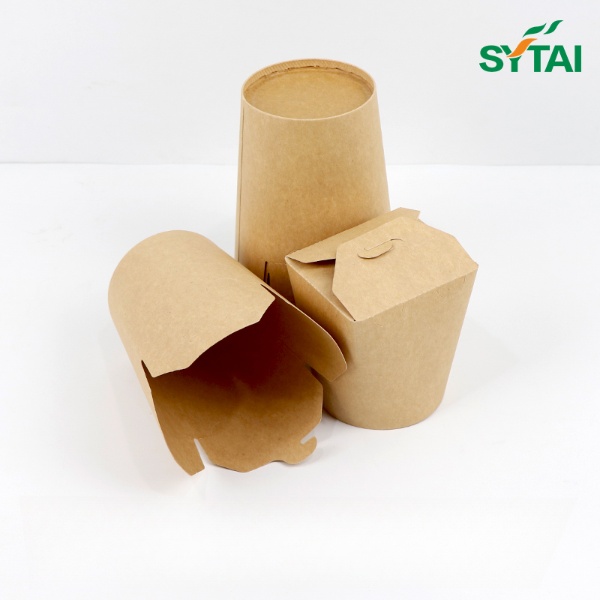
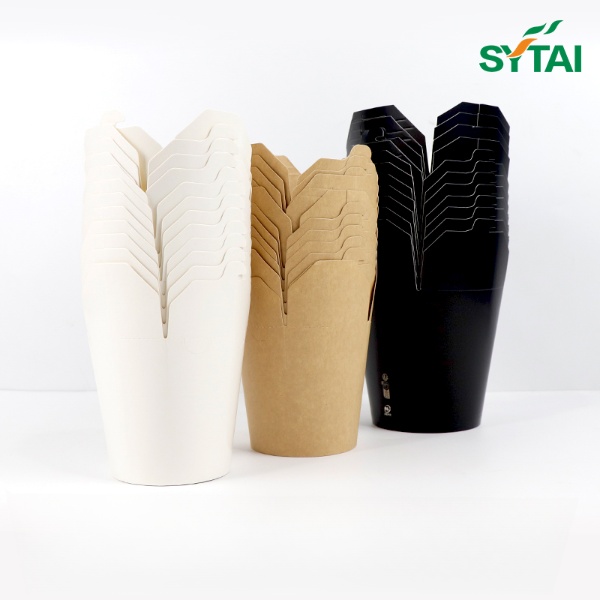
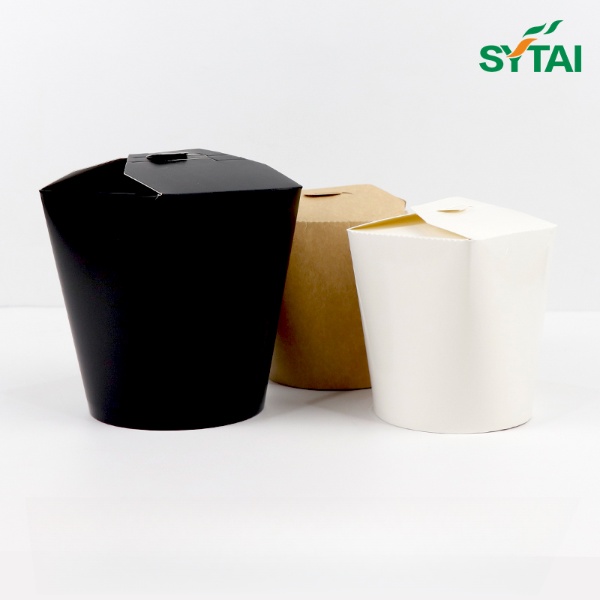
Noodle Packaging Box
Noodle Box Takeout Box
Noodle Packaging Box

Noodle Boxes Custom Packaging Boxes

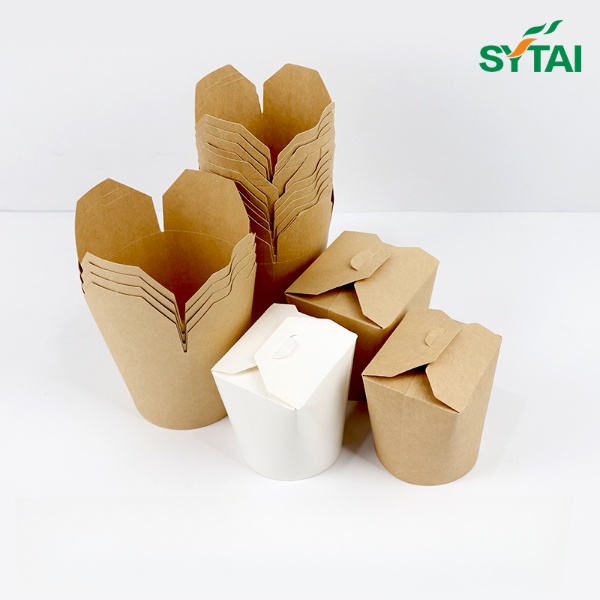
Custom Noodle Packaging Boxes: Made with food-grade paperboard and an oil-resistant coating, these boxes are designed to retain heat and prevent leaks. They are stackable and fully customizable—supporting bespoke die-cutting and four-color printing—making them ideal for noodle shops, restaurant chains, and fast-food establishments.
Brand Name: Sytai
Place of Origin: WUHAN,CHINA
Type: Bowl
Plastic Type: PE
Style: Single Wall
Material: Paper
Use: Food
Quantity
Minimum order quantity:30000pieces
Inquiry now
 

Why use a noodle packaging box as the standard container for serving food? 

The value of a noodle packaging box lies not merely in its ability to"hold noodles,"
but in whether it ensures a seamless operational flow from kitchen to customer.
A well-designed noodle box takeout box must perform reliably across three critical stages:
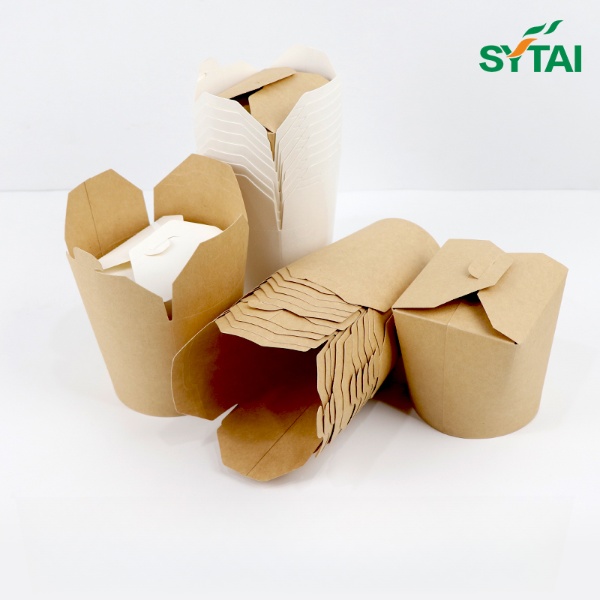
the kitchen, the delivery process, and the customer’s experience.
This is precisely why both traditional Chinese noodle shops and major chain brands have gravitated toward the classic,
foldable Chinese takeout box design. Its advantages can be quantified in four key areas:
📦Efficient Assembly: Featuring pre-pressed creases and a locking base, these boxes can be retrieved, unfolded,
and secured in a single motion—no tape or staples required. Saving even a few seconds per
order during peak hours directly helps shorten the queue for food preparation and service.
🔥Temperature Retention & Grease Resistance: A specialized interior coating creates a continuous barrier,
preventing liquids from soaking into the paper fibers. This ensures the base
of the box remains sturdy and won’t soften or collapse during delivery.
♻️Recyclable Materials: Constructed from paper-based materials and printed with water-based inks,
these boxes can be flattened and sorted right at the restaurant, significantly reducing the volume of kitchen waste.
Compared to expanded foam or composite plastic containers, this paper-based solution also
complies more easily with the packaging regulations found in an increasing number of international markets.
🎨Full-Surface Branding: All five visible sides of the folded box can be printed,
with the lid serving as a prime spot for brand exposure. For noodle restaurant chains,
a well-branded box becomes a shareable asset—customers may photograph it and spread the word,
generating promotional value at no additional advertising cost.

Five Essential Criteria for Custom Noodle Packaging Boxes
When discussing custom noodle packaging boxes, it is easy to overlook the fact that"packaging is a functional tool,"
not merely a flat graphic design. The functional criteria for noodle containers can be broken down into five key aspects,
each corresponding to a specific potential point of failure:
Oil Resistance: Measured by the time it takes for oil or grease to permeate the material. Standard,
uncoated paperboard will show oil stains or seepage quickly upon contact with oily broth,
whereas paperboard treated with a PE or PLA coating significantly extends the barrier duration.
Heat Retention: For paper-based containers, heat retention depends on structural airtightness rather than the material itself.
The depth of the engagement between the lid’s flange and the container body, along with the precision of the corner folds,
determines the rate of heat loss. For restaurants with a larger delivery radius, structural airtightness is a more critical factor
for ensuring the food arrives at the right temperature than the grammage (thickness/weight) of the paperboard.
Compression Resistance and Stackability: During delivery, stacking pressure is concentrated on the four edges of the lid.
The placement of structural ribs, the flatness of the lid, and the rigidity of the paperboard collectively determine how many layers can be stacked safely.
Leak-Proofing: For noodle dishes served in broth, the most common issue is leakage at the corners.
Common solutions include applying adhesive at the four corners, reinforcing the bottom corners, or using an internal liner;
the best approach depends on the volume of the broth and the potential for the container to tilt.
Compliance and Recyclability: Materials intended for food contact must meet the regulatory requirements of the target market.
For export orders, this typically necessitates documentation regarding chemical migration limits.
It is essential to clarify these requirements during the quoting phase to avoid production delays
caused by the need to obtain documentation after mass production has already begun.
 

Use Cases for Noodle Packaging Boxes

The role of a single noodle packaging box varies depending on the channel.
Understanding these contextual differences is far more effective for
driving conversions than simply listing technical specifications.
Chinese-style noodle shops and ramen restaurants: The primary requirements are fast service and leak-proof
containment for noodle soups. Foldable boxes—whether with square or round bases—often
paired with an inner liner, help maintain a steady workflow during peak hours,
while the lid serves as a canvas for brand exposure.
Chain restaurants and cloud kitchens: The focus here is standardization.
Using the same die-cut design and paper weight across multiple locations ensures a
consistent delivery experience and simplifies inventory management for central kitchens.
Instant food and pre-packaged brands: The logic for instant noodle packaging is entirely different—it is
designed for retail shelves rather than dining tables. The structure prioritizes rigidity and a
premium"unboxing"feel, while the visual design must accommodate nutritional information,
cooking instructions, and barcodes.
Group catering and central kitchens: Given the large volumes and rapid turnover,
the top priorities for these noodle box takeout boxes are stackability and ease of flattening for recycling.
In this context, reducing the variety of box types is more effective at lowering overall
operational costs than optimizing the unit cost of an individual box.
Retail and gift sets: For dry noodle gift sets sold in supermarkets or via e-commerce,
the standard approach is a rigid, two-piece (lid-and-base) cardboard box.
While these share the same brand visual identity as the takeout packaging, they feature a distinct structural design.

The true value of a noodle box is ultimately determined in the few seconds when a customer lifts the lid—is the food still hot?
Has the broth stayed inside? Is the brand, displayed on the box, remembered?
Noodle Boxes Custom Packaging Boxes offers more than just a standard, off-the-shelf product;
it provides a structural solution tailored to specific dishes, distribution channels, and market regulations.
From die-cutting to printing, every stage of the process can be precisely defined, verified, and replicated.

1. Do you have your own factory?

Yes, we are a professional manufacturer. We own a factory in Wuhan City, Hubei Province. Established in 2006, our facility has a massive annual production capacity of over 9 billion pieces.

2. Can I get a sample before placing a bulk order?

Absolutely. We understand the importance of quality control. We have a range of quality samples available with different techniques applied for your reference. You only need to pay the shipping cost to receive them, and we ship to all countries.


3. What can you buy from us?

We offer a comprehensive range of disposable tableware and packaging solutions, including:

  • Paper Cups & Paper Bowls.

  • Paper Bags.

  • Drinking Straws.

  • Paper Plates

  • Paper Raw Materials.

  • Paper Plates

  • Sugarcane (Bagasse) Tableware.

  • Disposable Cutlery

  • Paper Raw Materials

  • Lids and more.


4. Why should you buy from us instead of other suppliers?

You should choose us because of our advanced manufacturing capabilities and strict quality control. Our factory is equipped with:

  • Corrugated Paper Machine.

  • PE and PLA Coating Machines.

  • Printing Machines (capable of up to 7 colors).

  • 100 High-Speed Forming Machines operating in controlled dust-free environments

  • Furthermore, we hold international certifications to guarantee our quality and reliability, including ISO 9001/14001/18001, LFGB, BV, SGS, and FSC certificates.

5. Can you print my logo on your paper packaging containers?

Yes, we offer custom printing services. Please notify us formally before production begins. We will first confirm the design and create a sample for your approval to ensure it meets your expectations.

6.What materials are used to produce your products?

We primarily use food-grade materials, including virgin paperboard with PE coating for waterproofing, as well as environmentally friendly PLA (cornstarch) coating. We also offer sugarcane (bagasse) pulp products. All materials are safe for direct food contact.

7.Are your products environmentally friendly or compostable?

Yes, sustainability is a key focus for us. We offer multiple eco-friendly options

  • Paper products are made from renewable resources and are recyclable.

  • PLA coated products are industrially compostable.

  • Sugarcane (Bagasse) products are made from 100% natural agricultural fiber and are both compostable and microwave-safe.

    Our FSC certification ensures our paper comes from responsibly managed forests.


Do you provide OEM (Original Equipment Manufacturer) service?

Yes, we strongly support OEM. We can customize not only the logo printing but also the product size, shape, and even packaging design to meet your specific brand needs. Just share your ideas or drawings with us.

FAQ
Recommended Products