


123123123
 123123123


What is a paper bag with handles called?Guide to Paper Bag Handle Types
2026-06-09
123123123
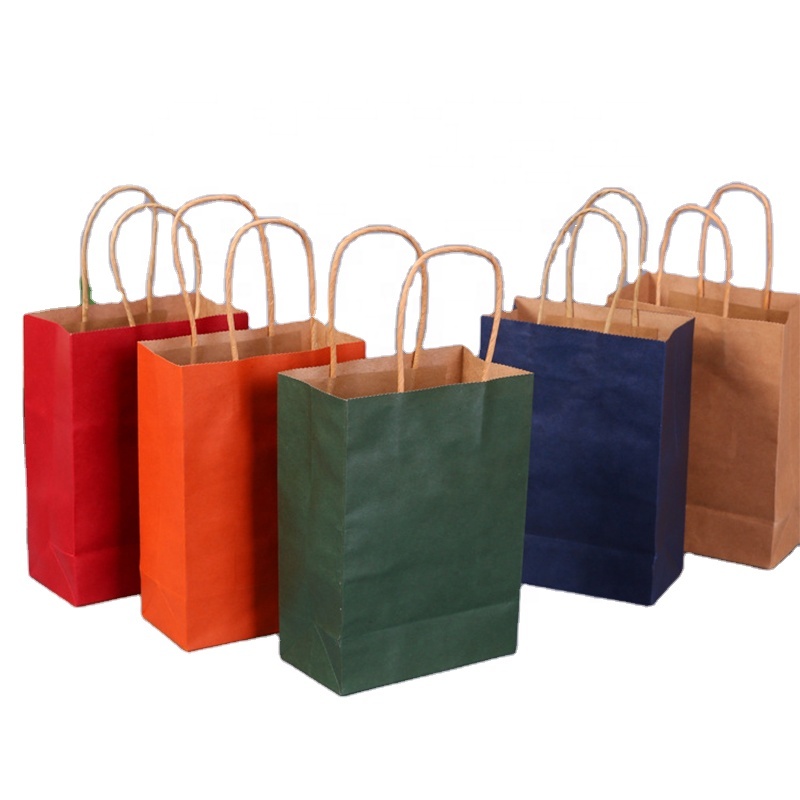
When selecting paper bags, the choice of handle is crucial, as it is central to both load-bearing capacity and the user experience.
The main types of paper bag handles currently on the market include twisted, flat, die-cut, rope, and ribbon handles; each varies significantly in terms of load-bearing capacity, comfort, and cost.
The main types of paper bag handles currently on the market include twisted, flat, die-cut, rope, and ribbon handles; each varies significantly in terms of load-bearing capacity, comfort, and cost.
Selecting the right handle type not only effectively reduces the rate of packaging failure but also allows for customized designs that convey brand details, helping the product stand out in a competitive retail market.
What is a paper bag with handles called?
In the industry, paper bags with handles are commonly referred to as "paper shopping bags" or "paper tote bags." Under international trade classifications, they are defined as bags made of paper, featuring handles, and primarily used for carrying retail goods or takeout food.
Additionally, depending on the manufacturing process and bottom structure, there is the SOS bag (Self-Opening Sack)—typically featuring twisted or flat paper handles—which is widely used in fast-food restaurants, cafés, and convenience stores.
Additionally, depending on the manufacturing process and bottom structure, there is the SOS bag (Self-Opening Sack)—typically featuring twisted or flat paper handles—which is widely used in fast-food restaurants, cafés, and convenience stores.
What are the main types of paper bag handles?
The mainstream paper bag handles currently on the market can be categorized into six major types, each offering unique B2B value in terms of material, load-bearing capacity, cost, and application scenarios:
| Handle Type | Key Features | Load Capacity | Typical Use Cases |
| Twisted Handle | Made of twisted paper; low cost and eco-friendly | 3–5 kg | Takeout, general retail, food shops |
| Flat Handle | Flat Handle | 5–8 kg | Bakeries, bookstores |
| Die-cut Handle | Die-cut opening in the bag itself; integrated design | 4–6 kg | Magazines, clothing, lightweight items |
| Rope Handle | Cotton, nylon, or polyester rope; comfortable and sturdy Over | 10 kg | Alcohol, luxury goods, high-end gifts |
| Ribbon Handle | Silk or satin material; elegant, premium look | 2–4 kg | Jewelry, cosmetics, wedding favors |
| Cotton Handle | Woven natural cotton fiber; soft and premium feel | 8–12 kg | Fashion brands, high-end boutiques |
What are the differences between them?
1️⃣ Twisted Handle
Made by tightly twisting multiple strands of paper, utilizing the paper's inherent fiber tension to create a sturdy, rope-like structure. Market data shows that approximately 60% of retailers prefer twisted handles; their combination of cost-effectiveness and eco-friendliness makes them the top choice for paper takeaway bags.
Made by tightly twisting multiple strands of paper, utilizing the paper's inherent fiber tension to create a sturdy, rope-like structure. Market data shows that approximately 60% of retailers prefer twisted handles; their combination of cost-effectiveness and eco-friendliness makes them the top choice for paper takeaway bags.
2️⃣ Flat Handle
Constructed by folding and gluing multiple layers of paper strips for reinforcement, these handles offer a wider grip surface than twisted handles, reducing pressure on the palm. Tests indicate that high-quality flat handles can support 5–8 kg; their wide surface area also makes them ideal for printing brand logos. They are an excellent choice for coffee chains and fast-food brands looking to enhance the customer experience during frequent takeaway operations.
Constructed by folding and gluing multiple layers of paper strips for reinforcement, these handles offer a wider grip surface than twisted handles, reducing pressure on the palm. Tests indicate that high-quality flat handles can support 5–8 kg; their wide surface area also makes them ideal for printing brand logos. They are an excellent choice for coffee chains and fast-food brands looking to enhance the customer experience during frequent takeaway operations.
3️⃣ Die-cut Handle
Created by cutting a circular or slot-shaped opening directly into the paper at the bag's top, eliminating the need for additional materials. While this is the most cost-efficient solution, load-bearing capacity depends entirely on paper thickness—using paper heavier than 250gsm is recommended to ensure structural integrity. It is suitable for lightweight items like books and magazines that can be carried by cradling the bag.
Created by cutting a circular or slot-shaped opening directly into the paper at the bag's top, eliminating the need for additional materials. While this is the most cost-efficient solution, load-bearing capacity depends entirely on paper thickness—using paper heavier than 250gsm is recommended to ensure structural integrity. It is suitable for lightweight items like books and magazines that can be carried by cradling the bag.
4️⃣ Rope Handle
Made from cotton, nylon, or polyester rope and secured by threading it through reinforced holes at the bag's opening. This offers the highest load-bearing capacity of all paper bag handle types, capable of supporting weights exceeding 10 kg.
Made from cotton, nylon, or polyester rope and secured by threading it through reinforced holes at the bag's opening. This offers the highest load-bearing capacity of all paper bag handle types, capable of supporting weights exceeding 10 kg.
5️⃣ Ribbon Handle
Made from satin, grosgrain, or organza, these handles offer strong visual appeal and instantly elevate the packaging's "gift-like" quality. About 20% of retailers opt for ribbon handles during holidays or promotional events to boost perceived brand value. They are ideal for jewelry stores, perfume brands, and high-end gift retailers.
Made from satin, grosgrain, or organza, these handles offer strong visual appeal and instantly elevate the packaging's "gift-like" quality. About 20% of retailers opt for ribbon handles during holidays or promotional events to boost perceived brand value. They are ideal for jewelry stores, perfume brands, and high-end gift retailers.
6️⃣ Cotton Handle
Made from 100% natural cotton fibers, these handles are soft, breathable, and fully biodegradable. Cotton rope handles can support 8–12 kg and offer a very comfortable grip, making them particularly suitable for shopping scenarios requiring the bag to be carried for extended periods. For brands that prioritize an eco-friendly image and a premium user experience, cotton handles are a preferred choice for custom paper bags.
Made from 100% natural cotton fibers, these handles are soft, breathable, and fully biodegradable. Cotton rope handles can support 8–12 kg and offer a very comfortable grip, making them particularly suitable for shopping scenarios requiring the bag to be carried for extended periods. For brands that prioritize an eco-friendly image and a premium user experience, cotton handles are a preferred choice for custom paper bags.
What details regarding paper bag handles impact product quality and brand image?
Setting aside the material and appearance of the handles, three specific details are crucial in shaping the experience for B2B wholesale clients:
1. Reinforcement Technique (Turn-top Reinforcement)
High-quality paper bags with handles typically feature a "folded hem with adhesive reinforcement" design at the opening—known as the "Turn Over Top." This method significantly strengthens the connection between the handle and the bag body, preventing tearing under load.
High-quality paper bags with handles typically feature a "folded hem with adhesive reinforcement" design at the opening—known as the "Turn Over Top." This method significantly strengthens the connection between the handle and the bag body, preventing tearing under load.
2. Handle Length Ergonomics
Handle length determines the comfort and convenience of carrying the bag. For taller customers or those wearing thick winter coats, a slightly longer handle design (e.g., over 32 cm) makes it easier to sling the shopping bag over the shoulder.
Handle length determines the comfort and convenience of carrying the bag. For taller customers or those wearing thick winter coats, a slightly longer handle design (e.g., over 32 cm) makes it easier to sling the shopping bag over the shoulder.
3. Base Material and Environmental Certification
Mainstream wholesale buyers in Europe and North America are increasingly strict regarding environmental certification requirements. Using FSC™-certified kraft paper is highly recommended; it is essentially the "minimum threshold" for entering retail supply chains in these regions.
Mainstream wholesale buyers in Europe and North America are increasingly strict regarding environmental certification requirements. Using FSC™-certified kraft paper is highly recommended; it is essentially the "minimum threshold" for entering retail supply chains in these regions.
New - June 05, 2026
What is the difference between hot paper cups and cold paper cups?
Confused between hot paper cups and cold paper cups? Discover the key differences in coating, thickness, and application. A must-read for B2B buyers sourcing wholesale disposable cups for food service businesses.

New - June 03, 2026
What Are Compostable Paper Bags?food paper bags be composted?
Wondering if food paper bags can be fully composted? Explore how high-performance paper bags for food packaging meet B2B compliance. Certified sustainable & durable.
New - June 01, 2026
What is a single wall paper cup?What does a single walled cup do?
Curious about what a single-wall paper cup is? Sytai provides the answers—explaining the uses, advantages, and ideal applications of single-wall cups. This guide is a must-read for B2B procurement professionals and those working in the food and beverage packaging industry.