The Complete Guide to Disposable Cups: Single Wall, Double Wall, Ripple Wall, Embossed, PET, PP, and French Fries Cup
 123123123
Quick Summary
Disposable cups fall into two broad families: paper-based structural designs (single wall, double wall, ripple wall, embossed) and plastic material grades (PET, PP, and general plastic cups). Each type serves different beverage temperatures, branding needs, and regulatory environments.
• Single wall cups are cost-effective for cold drinks.
• Double wall paper cups and ripple wall paper cups provide heat insulation for hot beverages.
• Embossed paper cups add tactile branding.
• PET cups dominate clear cold-drink applications; PP cups offer better heat resistance and reusability.
• French Fries Cup is a specialty portion cup for sauces and sides, not beverages.
Choosing correctly improves user experience, reduces waste, and meets 2026 sustainability expectations.
Introduction: Why Disposable Cup Selection Matters More Than Ever
Over 600 billion disposable cups are used globally each year – most of them for takeaway coffee, soft drinks, bubble tea, and fast-food sides. Yet many buyers still treat cups as a commodity, focusing only on price per unit. That approach is becoming risky.
In 2026, three forces are reshaping the market:
• Stricter single-use plastic regulations in the EU, Canada, and Southeast Asia.
• Consumer preference for tactile, premium packaging – embossed and ripple designs signal quality.
• Operational needs – a cup that leaks or burns the customer’s hand destroys brand loyalty.
This guide breaks down eight essential disposable cup types by structure (paper) and material (plastic), plus the often-overlooked French Fries Cup. You’ll learn which cup fits cold soda, hot latte, on-the-go sauce, or frozen dessert – and how to source them without compliance headaches.
Part 1: Paper-Based Disposable Cups – Structure Defines Performance
Paper cups are not all the same. The wall structure determines heat retention, grip comfort, printability, and perceived quality.
1.1 Single Wall Cups – The Economical Workhorse
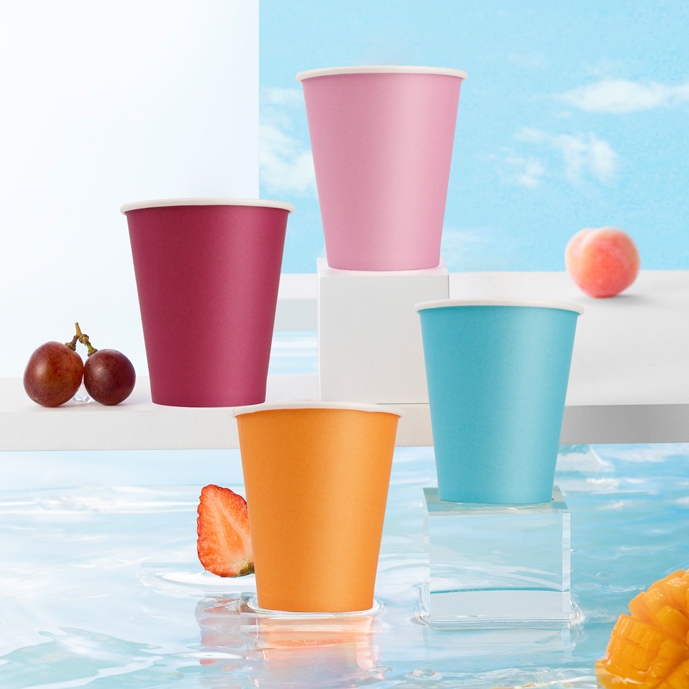
Single wall cups are made from one layer of paperboard, usually coated with PE or PLA on the inside. They are lightweight, stackable, and the least expensive paper cup option.
Best applications: Cold drinks (iced coffee, soda, juice); short-duration hot beverages (e.g., office water coolers); budget-conscious events or food trucks.
✅ Pros: Low cost, excellent for custom printing, compact for shipping.
❌ Cons: Poor heat insulation – hot drinks require a sleeve; can become soggy if used for long periods.
Buyer tip: For cold beverages, single wall cups with a clear PET lid are a standard combo. Always verify lid compatibility before ordering.
1.2 Double Wall Paper Cups – Built In Insulation
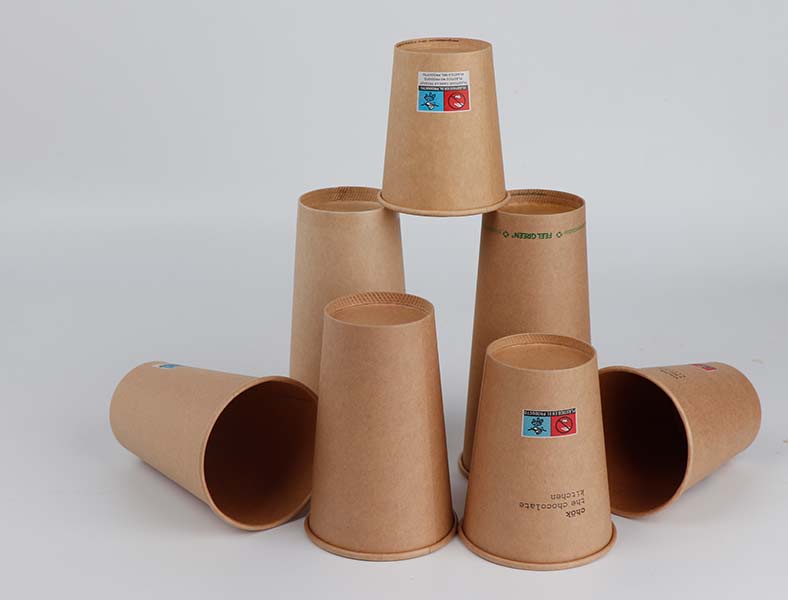
Double wall cups use two layers of paperboard with a small air gap between them. This construction creates a natural heat shield, keeping the outer surface cool to the touch while maintaining internal beverage temperature.
Best applications: Specialty coffee shops (latte, cappuccino); premium tea takeaways; any hot beverage where a sleeve is considered inconvenient or wasteful.
✅ Pros: No need for separate cardboard sleeves; comfortable grip; better brand image.
❌ Cons: Slightly higher cost than single wall; slightly thicker stack.
Industry insight: Many European coffee chains have switched to double wall paper cups as part of their plastic-reduction strategy because they eliminate the need for double-sleeving.
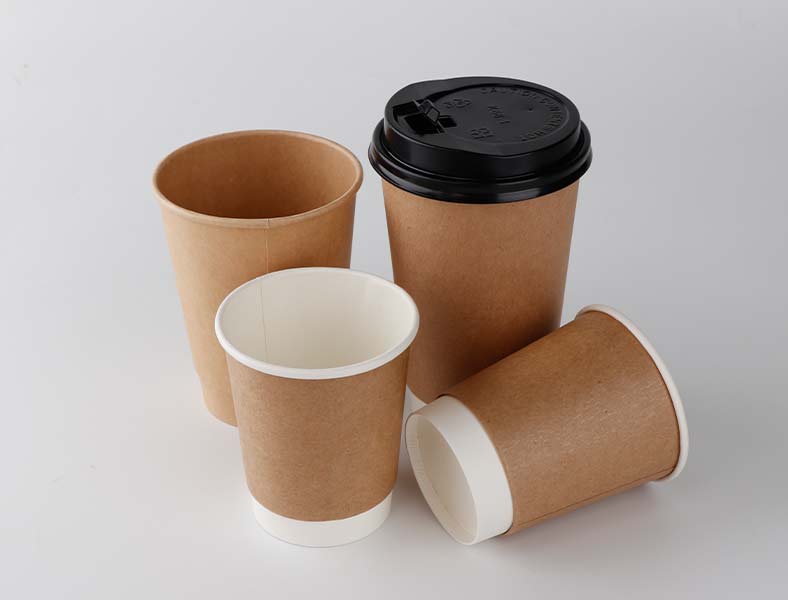
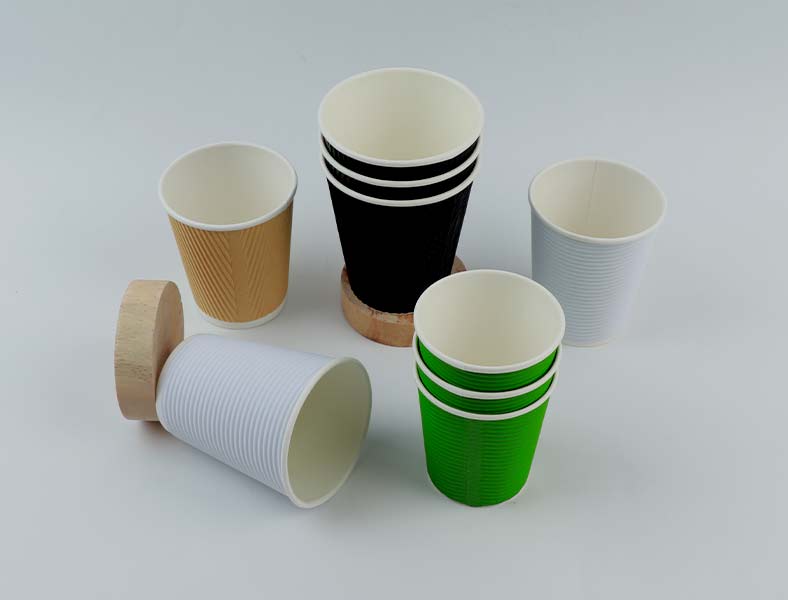
1.3 Ripple Wall Cups – Corrugated Grip & Artisanal Feel
Ripple Wall Paper Cups feature a corrugated (wavy) outer layer bonded to a smooth inner liner. The air pockets between the ripples provide exceptional insulation, and the textured surface offers a non slip grip – even with wet hands.
Best applications: Artisan coffee shops and roasteries; outdoor events (food festivals, farmers’ markets); hot chocolate or mulled wine stands.
✅ Pros: Superior heat protection; distinctive vintage or craft aesthetic; anti-slip.
❌ Cons: Higher manufacturing complexity; limited print area on the rippled section (branding is usually placed on a smooth band).
Design note: Some ripple wall paper cups use kraft paper on the outside, enhancing the eco-friendly, natural look.
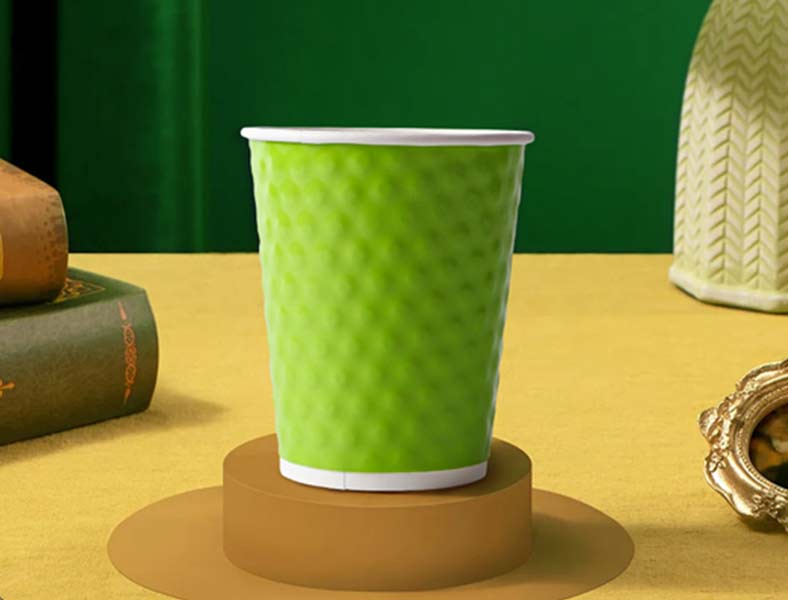
1.4 Embossed Paper Cups – Branding Through Texture
Embossed Cups are created by pressing a raised pattern into the paperboard surface – either on the outer wall or as a rim detail. Unlike printing, embossing does not fade, smudge, or require ink.
Best applications: Hotel breakfast buffets; premium takeaway brands that want a luxury unboxing feel; corporate gifts and promotional events.
✅ Pros: Permanent branding; tactile experience that customers remember; works well with recycled paper.
❌ Cons: Tooling cost for custom embossing dies; longer lead time.
Strategic use: Combine embossed paper cups with a minimalist logo – the understated texture signals quality without being flashy.
Part 2: Plastic Disposable Cups – PET vs. PP vs. General Plastic Cups
Plastic cups remain dominant for cold beverages, parties, and high-volume takeaway due to their clarity, durability, and low weight. However, material choice matters enormously for heat tolerance, recyclability, and regulatory compliance.
2.1 Plastic Cups – The Broad Category
When buyers say plastic cups, they usually mean single-use cold drink cups made from either PET or PP. But not all plastic cups are equal. Key selection criteria include:
Clarity: PET is crystal clear; PP is slightly hazy.
Temperature resistance: PP handles warm liquids (up to ~100°C), PET deforms above ~50°C.
Recyclability: PET is widely recycled in many regions; PP recycling is growing but less universal.
General advice: For parties, water dispensers, or room-temperature soft drinks, standard plastic cups work fine. But for bubble tea, iced lattes, or any application with a sealed lid, always specify PET or PP grade.
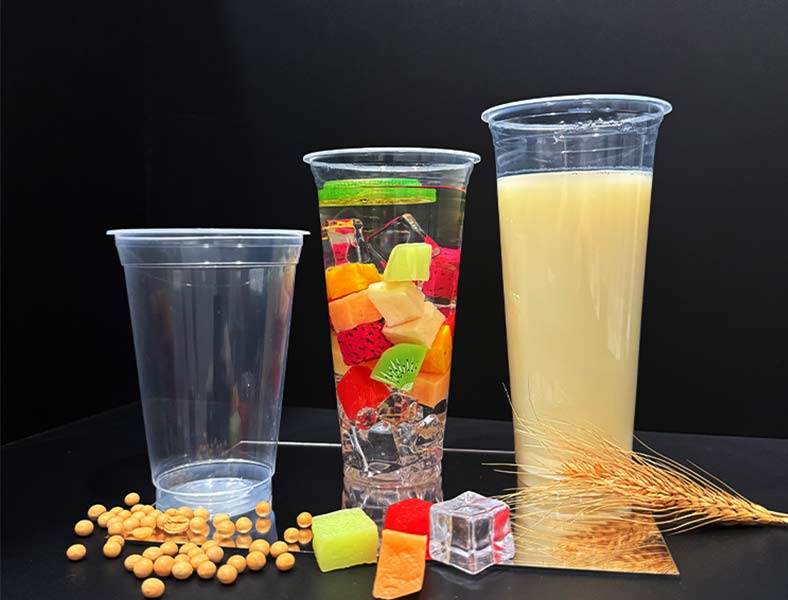
2.2 PET Cups – The Clear Standard for Cold Drinks
PET cups (polyethylene terephthalate) are the most common transparent disposable cups. They are lightweight, shatter-resistant, and highly recyclable (resin code #1).
Best applications: Bubble tea shops; cold brew coffee on ice; smoothies and juice bars; pre-packaged deli salads (often with a dome lid).
Operating temperature: 0°C to 50°C (no hot liquids)
Excellent oxygen barrier – keeps carbonated drinks fizzy
Available from 3 oz (sampling cups) to 32 oz (large sodas)
Compliance note: Several U.S. states and EU countries accept PET cups in curbside recycling if rinsed. However, always check local guidelines – lids and straws may need separate disposal.
2.3 PP Cups – Heat Resistant and Reusable Potential
PP cups (polypropylene) are less transparent than PET but offer superior heat resistance and chemical stability. Many reusable travel mugs and yogurt containers are made from PP.
Best applications: Hot soup or noodle takeaway (with a lid); coffee or tea where a paper cup is not preferred (e.g., stadiums); dessert cups for puddings or gelato (often with a snap-on lid).
Temperature range: -20°C to 100°C
More flexible than PET – less likely to crack
Resin code #5 – recyclable but less commonly accepted than #1
Buyer tip: PP cups are the go-to choice when you need a clear plastic cup that can tolerate a warm dishwasher cycle (reusable versions). For single-use hot beverages, double-wall paper cups are still more sustainable, but pp cups fill a niche for stadiums and events where breakage is a concern.
Part 3: French Fries Cup – The Specialty Portion Cup
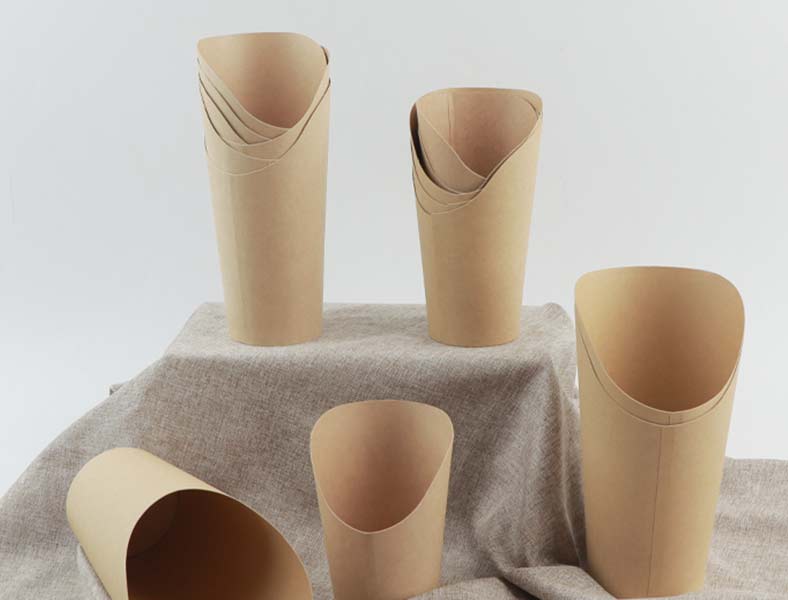
The French Fries Cup is not a beverage cup – it is a small, tapered container designed for french fries, onion rings, chicken tenders, or dipping sauces. However, many foodservice operators source them alongside disposable drink cups, so they deserve a place in this guide.
Typical features: Conical or “frustum” shape (wider at top, narrower at base); height: 8–15 cm (3–6 inches); materials: paperboard (PE-coated) or solid bleached sulfate (SBS); often sold with a separate sauce cup lid or as an open-top boat.
Best applications: Fast-food drive-thru (fries portion); food trucks serving loaded fries; carnival or festival snack stands; condiment portioning for ketchup, mustard, or ranch.
Why it matters for cup buyers: If you are equipping a takeaway restaurant, you will likely need both disposable cups for beverages and French Fries Cup for sides. Ordering them from the same supplier simplifies logistics and ensures consistent branding.
Design variation: Some French Fries Cup models feature a fold-over lip to prevent sauce leakage. Others are sold as a two-piece set – a paper cone plus a small plastic dipping cup that fits inside.
Part 4: How to Choose the Right Disposable Cup – A Decision Matrix
Use this quick reference to match your application with the optimal cup type.
|
Application |
Recommended Cup |
Why |
|
Hot coffee (takeaway) |
Double wall paper cups or Ripple Wall Paper Cups |
Insulation without extra sleeve |
|
Iced latte / bubble tea |
PET cups |
Crystal clarity, cold tolerance |
|
Hot soup / noodles |
PP cups |
Heat resistance up to 100°C |
|
Branded premium event |
Embossed paper cups |
Tactile, permanent logo |
|
Budget-conscious cold soda |
Single wall cups (paper) or generic plastic cups |
Lowest cost per unit |
|
Fast-food fries side |
French Fries Cup |
Portion control, stackable |
|
Catering buffet water |
PP cups (reusable-grade) or standard plastic cups |
Durability for light washing |
Part 5: Compliance, Sourcing, and Future Trends
5.1 Regulatory Snapshot (2026)
EU: Single-use plastic directive restricts certain plastic cups; paper cups with plastic lining must display disposal instructions.
Canada: PP and PET cups are allowed but face extended producer responsibility (EPR) fees.
Japan & South Korea: Encouraging paper-based structures (double wall, ripple wall) over plastic cups.
USA (state-level): California, Oregon, and Colorado have labeling laws for recyclability – PET cups are preferred over mixed-material cups.
5.2 Sourcing Best Practices
Test lid fit – A cup is only as good as its lid. Lids for single wall cups often differ from those for double wall paper cups due to rim diameter variations.
Ask for food-contact certificates – FDA, LFGB, or EU 10/2011 for both paper and plastic cups.
Consider hybrid orders – Combine PET cups for cold drinks with paper french fry cups for sides to reduce shipping costs.
5.3 What’s Next?
Water-based coatings (plastic-free) are slowly entering paper cup segments, including ripple wall and embossed designs.
Embossed paper cups will gain popularity as brands seek plastic-free texture alternatives.
PP cups with bio-based additives (e.g., calcium carbonate) are appearing as “lower-carbon” options.
Conclusion: Move Beyond Generic Disposable Cups
Every cup type – from single wall cups to French Fries Cup – has a specific job. Using the wrong one wastes money and frustrates customers. Double wall paper cups and ripple wall paper cups protect hands and elevate coffee experiences. PET cups showcase colorful cold drinks. PP cups handle heat where paper fails. Embossed paper cups turn packaging into a silent salesperson. And the humble fries paper cup ensures that your sides get the same attention as your beverages.
When sourcing, always match the cup’s structure and material to your beverage temperature, brand image, and destination market’s regulations. The right disposable cup is not an expense – it is an investment in customer satisfaction and operational efficiency.
Need a reliable supplier for these cup types? Look for manufacturers that offer tooling for embossed designs, high-speed production of double wall and ripple wall cups, and certified food-grade PET/PP materials. Request samples before bulk ordering – and always test the lid seal.