


EU PPWR Regulation Enacted: Compliance Guide for Food Packaging Exporters
2026-08-14

On August 12, 2026, the EU’s Packaging and Packaging Waste Regulation (PPWR, (EU) 2025/40) officially entered into full force. This marks a shift in EU packaging regulation from the previous "Directive" model—which required transposition into national laws—to a "Regulation" directly applicable across all member states, aiming to establish a unified framework for the full lifecycle management of packaging.
The following is an overview of the PPWR’s scope and future outlook, based on currently available information.
The following is an overview of the PPWR’s scope and future outlook, based on currently available information.
Scope of control: Unprecedented breadth and depth.

Scope of Application: Applies to all packaging and packaging waste placed on the EU market, regardless of material (plastic, paper, glass, metal, wood, composite materials, etc.), source (industrial, commercial, household, etc.), or intended use (B2B or B2C). This means that product sales packaging, grouped packaging, transport packaging, and e-commerce delivery packaging are all subject to regulation.
Applicable Entities: All economic operators placing packaging or packaged products on the EU market for the first time are subject to these rules, regardless of whether the enterprise is established within the EU. Specific entities include:
Manufacturers: Entities responsible for product design, conformity assessment, and issuing the declaration of conformity.
Importers: Entities responsible for verifying that the non-EU manufacturer has completed the conformity assessment.
Distributors/Retailers: Required to exercise due diligence by checking product registration and labeling.
Producers: Subject to "Extended Producer Responsibility (EPR)"; required to register and pay fees separately in each country of sale.
Importers: Entities responsible for verifying that the non-EU manufacturer has completed the conformity assessment.
Distributors/Retailers: Required to exercise due diligence by checking product registration and labeling.
Producers: Subject to "Extended Producer Responsibility (EPR)"; required to register and pay fees separately in each country of sale.
E-commerce platforms and logistics service providers: Platforms are responsible for verifying the EPR compliance of sellers.
Definition of Packaging: Refers to items used to contain, protect, handle, deliver, or present products, including cartons, adhesive tape, cushioning materials, pallets, etc. Notably, empty envelopes intended for private use are not considered packaging.
Definition of Packaging: Refers to items used to contain, protect, handle, deliver, or present products, including cartons, adhesive tape, cushioning materials, pallets, etc. Notably, empty envelopes intended for private use are not considered packaging.
The regulations apply to all packaging and packaging waste placed on the EU market, covering all packaging types and materials:
🔸 Sales packaging: Includes various types of food-contact packaging; materials include plastic, metal, glass, bamboo/wood, paper, composite materials, etc.
🔸 Grouped packaging: Color-printed gift boxes, outer cardboard boxes, shrink wrap, paper inserts, paper dividers, etc.
🔸 Transport packaging: Corrugated boxes, moisture-proof liners, foam boxes, ice packs, stretch wrap, packing tape, bubble wrap, EPE foam, foam inserts, absorbent leak-proof pads, cable ties, etc.
🔸 Various application scenarios, including industrial packaging, commercial packaging, consumer goods packaging, e-commerce packaging, etc.
🔸 Sales packaging: Includes various types of food-contact packaging; materials include plastic, metal, glass, bamboo/wood, paper, composite materials, etc.
🔸 Grouped packaging: Color-printed gift boxes, outer cardboard boxes, shrink wrap, paper inserts, paper dividers, etc.
🔸 Transport packaging: Corrugated boxes, moisture-proof liners, foam boxes, ice packs, stretch wrap, packing tape, bubble wrap, EPE foam, foam inserts, absorbent leak-proof pads, cable ties, etc.
🔸 Various application scenarios, including industrial packaging, commercial packaging, consumer goods packaging, e-commerce packaging, etc.
Items not classified as packaging: Shipping containers; IV bags and syringes (considered functional components of medical devices); beverage cups sold empty; garbage bags; and pet waste bags.
Key Clauses Recommended for Attention by Enterprises in the Food Industry Chain
Effective from August 12, 2026:
➢ The sum of the concentrations of four heavy metals—lead, cadmium, mercury, and hexavalent chromium—in all packaging must be ≤100 mg/kg.
➢ PFAS limit requirements for food-contact packaging:
1. Any single PFAS substance <25 ppb (excluding PFAS polymers);
2. Sum of individual PFAS substances <250 ppb (excluding PFAS polymers);
3. Sum of all PFAS substances <50 ppm (including PFAS polymers).
If total fluorine exceeds 50 ppm, manufacturers or importers must provide downstream entities with proof regarding the fluorine content derived from PFAS or non-PFAS sources.
➢ The sum of the concentrations of four heavy metals—lead, cadmium, mercury, and hexavalent chromium—in all packaging must be ≤100 mg/kg.
➢ PFAS limit requirements for food-contact packaging:
1. Any single PFAS substance <25 ppb (excluding PFAS polymers);
2. Sum of individual PFAS substances <250 ppb (excluding PFAS polymers);
3. Sum of all PFAS substances <50 ppm (including PFAS polymers).
If total fluorine exceeds 50 ppm, manufacturers or importers must provide downstream entities with proof regarding the fluorine content derived from PFAS or non-PFAS sources.

Future Development: Continued Evolution and Uncertainty
The PPWR is a dynamic regulatory framework characterized by significant future uncertainties, requiring companies to maintain ongoing vigilance.
Pending Implementation Standards: Detailed standards for certain key requirements—such as specific assessment methods for packaging recyclability and lists of substances of concern—have not yet been released and are expected to be introduced gradually over the coming years.
Phased Target Implementation: The years 2030 and 2040 serve as critical milestones; mandatory enforcement of various quantitative targets at these times will necessitate long-term planning and investment from companies.
Ongoing Introduction of Supplementary Legislation: The European Commission will progressively issue a series of Delegated Acts and Implementing Acts to further refine regulatory requirements.
Stricter Enforcement: Penalties under the PPWR far exceed those of previous directives; non-compliant companies could face severe consequences, such as sales bans and mandatory product recalls. Market surveillance authorities across EU member states will progressively intensify enforcement efforts.
In summary, the implementation of the PPWR marks the beginning of a new phase in EU packaging compliance, characterized by stricter requirements and a broader scope. Relevant companies must treat this as a long-term strategic compliance imperative, continuously monitoring regulatory developments and adjusting their strategies accordingly.
Pending Implementation Standards: Detailed standards for certain key requirements—such as specific assessment methods for packaging recyclability and lists of substances of concern—have not yet been released and are expected to be introduced gradually over the coming years.
Phased Target Implementation: The years 2030 and 2040 serve as critical milestones; mandatory enforcement of various quantitative targets at these times will necessitate long-term planning and investment from companies.
Ongoing Introduction of Supplementary Legislation: The European Commission will progressively issue a series of Delegated Acts and Implementing Acts to further refine regulatory requirements.
Stricter Enforcement: Penalties under the PPWR far exceed those of previous directives; non-compliant companies could face severe consequences, such as sales bans and mandatory product recalls. Market surveillance authorities across EU member states will progressively intensify enforcement efforts.
In summary, the implementation of the PPWR marks the beginning of a new phase in EU packaging compliance, characterized by stricter requirements and a broader scope. Relevant companies must treat this as a long-term strategic compliance imperative, continuously monitoring regulatory developments and adjusting their strategies accordingly.
Sytai answer: Compliance is the ticket to entry, and we help you secure it.
1. Materials: Quality Control at the Source
We maintain a comprehensive portfolio covering paper-based, plant-fiber, and biodegradable materials. By utilizing water-based and bio-based coatings—rather than PFAS-containing grease-proofing agents—we ensure oil and water resistance while avoiding regulatory pitfalls regarding PFAS limits.
2. Testing: Data-Driven Assurance
Backed by a robust testing system, we maintain batch-level control over critical metrics such as heavy metal and fluorine content. Test reports accompany every shipment, giving customers confidence when exporting their products.
3. Certification: Global Market Access
With years of experience in international certifications and exports to over 100 countries, Sytai is well-versed in diverse regional regulations—ranging from the EU’s PPWR to plastic bans in North America and Southeast Asia. We help clients mitigate risks, such as having a shipment blocked in a specific market.
4. Service: End-to-End Support
We provide one-stop support—covering everything from material selection and prototype testing to EPR registration documentation and EU Authorized Representative coordination—for a wide range of clients, including restaurant chains, tea beverage brands, food delivery outlets, hotel procurement teams, and export traders.
We maintain a comprehensive portfolio covering paper-based, plant-fiber, and biodegradable materials. By utilizing water-based and bio-based coatings—rather than PFAS-containing grease-proofing agents—we ensure oil and water resistance while avoiding regulatory pitfalls regarding PFAS limits.
2. Testing: Data-Driven Assurance
Backed by a robust testing system, we maintain batch-level control over critical metrics such as heavy metal and fluorine content. Test reports accompany every shipment, giving customers confidence when exporting their products.
3. Certification: Global Market Access
With years of experience in international certifications and exports to over 100 countries, Sytai is well-versed in diverse regional regulations—ranging from the EU’s PPWR to plastic bans in North America and Southeast Asia. We help clients mitigate risks, such as having a shipment blocked in a specific market.
4. Service: End-to-End Support
We provide one-stop support—covering everything from material selection and prototype testing to EPR registration documentation and EU Authorized Representative coordination—for a wide range of clients, including restaurant chains, tea beverage brands, food delivery outlets, hotel procurement teams, and export traders.
As a primary manufacturer deeply rooted in the food and beverage packaging sector, Sytai holds a clear stance on this critical test: compliance is not merely a cost—it is an entry ticket. We not only secure this ticket for ourselves but also help our clients obtain it.
Industry News - August 26, 2026
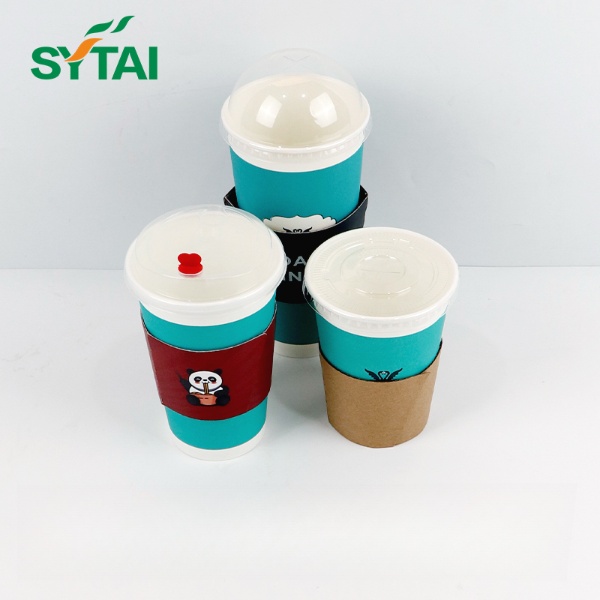
Single wall cup vs double wall cup: What is the difference?
Single wall paper cup vs double wall paper cup—what's the difference? Compare insulation, cost, sustainability, and find the best solution for your cafe, restaurant, or wholesale business. Expert B2B guide.
Industry News - August 23, 2026
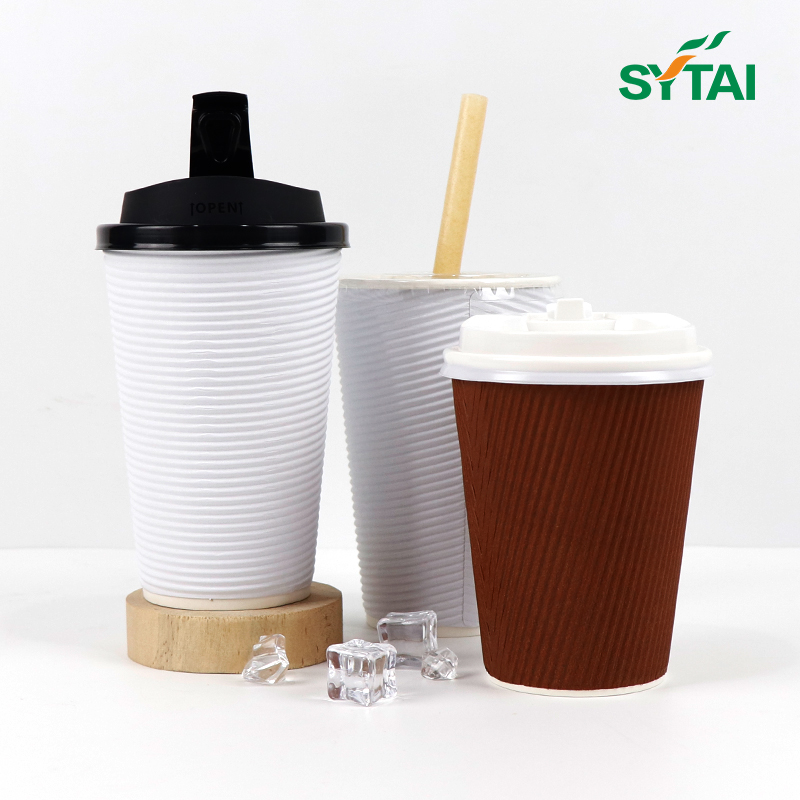
What are the benefits of ripple cups?Why We Use Ripple Cups?
Discover the benefits of ripple cups — superior insulation, secure grip, and no sleeves needed. Explore ripple wall paper cup types, uses, and sustainable solutions for coffee shops, cafés, and catering businesses. Find kraft ripple cups and disposable ripple coffee cups at wholesale prices.

Industry News - August 10, 2026
What is the difference between hot and cold paper cups?
What is the difference between hot and cold paper cups? Learn about coating, materials, and applications. Discover the best cold disposable cups, paper cold drink cups, and hot paper cup solutions for your foodservice business.