


123123123
 123123123
1. Classification by Material: Kraft Paper Bowls vs. White Paper Bowls
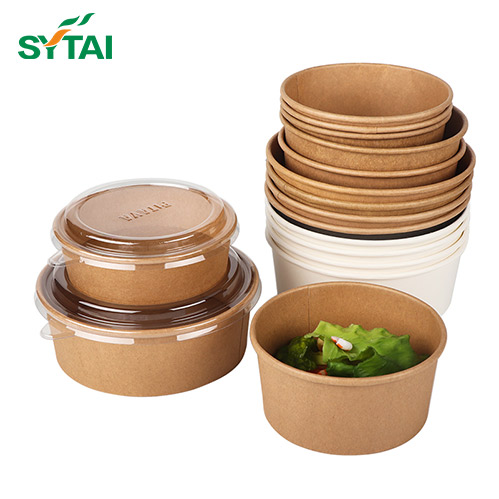
Kraft paper salad bowls are currently the most popular choice. Produced using the sulfate pulping process, kraft paper features long, strong fibers, making it 30–40% stronger than bleached paper of the same weight. Its natural brown appearance conveys an eco-friendly image; indeed, 68% of consumers perceive kraft paper as more environmentally friendly than white paper—even when their actual sustainability profiles are identical.
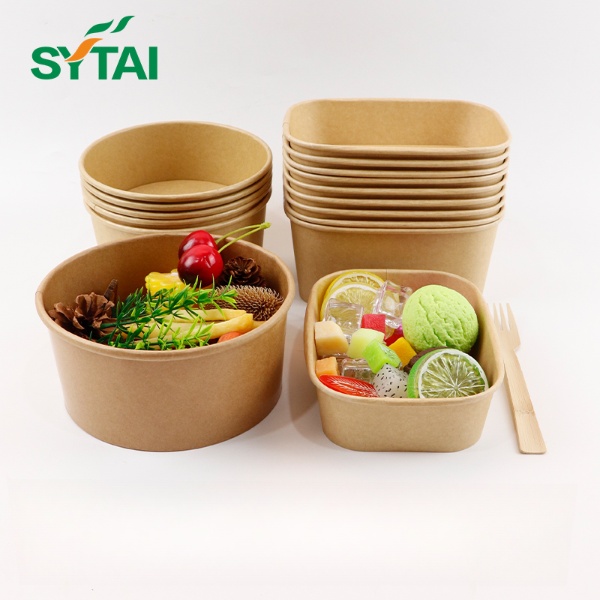
Round paper salad bowls are the classic choice, suitable for a wide range of uses—such as salads, mixed rice dishes, and noodle soups—and are easy to stack for storage; they also represent the largest share of the wholesale market for disposable salad bowls.
A Buying Guide to Types of Paper Salad Bowls
2026-09-16
123123123
What exactly are the different types of paper salad bowls?
Paper salad bowls are rapidly becoming one of the fastest-growing categories in the global food service packaging sector. Industry research indicates that the global paper bowl market, valued at approximately $4.82 billion in 2025, is projected to reach $7.27 billion by 2032, reflecting a compound annual growth rate (CAGR) of 6.5%.
Meanwhile, the global sustainable food packaging market is expected to hit $233 billion by 2027, with paper-based products serving as a primary driver of this growth.
Meanwhile, the global sustainable food packaging market is expected to hit $233 billion by 2027, with paper-based products serving as a primary driver of this growth.
For food service operators, delivery platforms, and food distributors, selecting the right kraft paper salad bowl goes far beyond a simple packaging swap; it directly impacts food freshness, customer experience, and the brand's eco-friendly image.
However, many buyers face challenges during the selection process: How do bowl sizes align with the menu? Should one choose PE or PLA coating? Are kraft paper bowls or white paper bowls a better fit for the brand identity? What are the minimum order quantities (MOQs) for custom printing? Without a systematic approach to selection, buyers risk encountering practical issues such as leakage, structural softening, or ill-fitting lids. This article categorizes paper salad bowls and breaks down key factors—including material, shape, size, coating, and lid type—while drawing on practical wholesale experience to provide a truly actionable guide for your purchasing decisions.
1. Classification by Material: Kraft Paper Bowls vs. White Paper Bowls
Kraft paper salad bowls are currently the most popular choice. Produced using the sulfate pulping process, kraft paper features long, strong fibers, making it 30–40% stronger than bleached paper of the same weight. Its natural brown appearance conveys an eco-friendly image; indeed, 68% of consumers perceive kraft paper as more environmentally friendly than white paper—even when their actual sustainability profiles are identical.
White paper bowls, on the other hand, are prized for their clean, bright aesthetic. They are ideal for showcasing colorful, fresh ingredients and are commonly found in fast-food and modern "light meal" settings. In short: brands emphasizing natural or organic concepts should opt for kraft paper bowls, while those seeking a crisp, high-end visual appeal should choose white paper bowls.
2. Classification by shape: round, rectangular, and square.
Round paper salad bowls are the classic choice, suitable for a wide range of uses—such as salads, mixed rice dishes, and noodle soups—and are easy to stack for storage; they also represent the largest share of the wholesale market for disposable salad bowls.
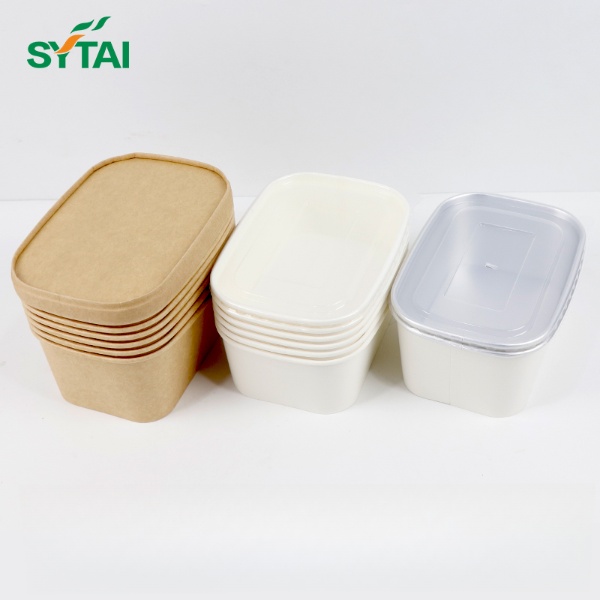
Rectangular bowls offer a more modern aesthetic, making them ideal for layered salads and neatly arranged ingredients, while also allowing for compact packing during delivery.
Square bowls provide a larger surface area for display, making them well-suited for creative salad presentation and the printing of brand graphics.
Guide to Buying Paper Salad Bowls
Coating Selection: PE, PLA, or Water-based?
This is one of the most critical decisions in the procurement process. PE (polyethylene) coatings offer the best water and oil resistance at the lowest cost but are not compostable;
PLA (polylactic acid) coatings are derived from plant starch and are industrially compostable, but they soften at temperatures above 45–50°C, making them unsuitable for hot food or microwave use;
Water-based coatings withstand temperatures of 90–100°C and allow for recycling via repulping, making them the top choice for microwave-safe paper bowls.
PLA (polylactic acid) coatings are derived from plant starch and are industrially compostable, but they soften at temperatures above 45–50°C, making them unsuitable for hot food or microwave use;
Water-based coatings withstand temperatures of 90–100°C and allow for recycling via repulping, making them the top choice for microwave-safe paper bowls.
Size Matching: Look Beyond Capacity Figures
Many buyers place orders based solely on volume (milliliters), only to find the bowls too shallow, lids unable to fit, or the food presentation looking underwhelming.
It is recommended to measure the volume based on actual serving portions and allow for "headspace" (clearance at the top) when determining the bowl size.
It is recommended to measure the volume based on actual serving portions and allow for "headspace" (clearance at the top) when determining the bowl size.
Lid Compatibility: Verify in Advance
PP lids offer high transparency and good heat resistance; PET lids provide superior clarity but come at a slightly higher cost; paper lids are the most eco-friendly option but offer a weaker seal.
Always confirm that a matching lid is available for your chosen bowl style before placing an order to avoid the awkward situation of receiving bowls without compatible lids.
Always confirm that a matching lid is available for your chosen bowl style before placing an order to avoid the awkward situation of receiving bowls without compatible lids.
Practical Recommendations for Procurement
Verification of certifications is essential. For exports to European and US markets, suppliers should be required to provide certifications for industrial compostability, FSC (Forest Stewardship Council), and FDA/LFGB food-contact safety.
Reference for custom printing MOQs: The typical minimum order quantity (MOQ) for custom-printed paper bowls is around 20,000–50,000 units per design, though some suppliers may accept smaller trial orders. It is advisable to request samples for actual food testing—verifying leak resistance, grease resistance, and heat retention—before placing a bulk order.
Supplier evaluation should focus on three key factors: a stable supply of food-grade paperboard (typically 200–280 gsm); possession of third-party test reports confirming compliance with EN 13432 or ASTM D6400 standards; and a monthly production capacity exceeding 500,000 units to ensure timely delivery during peak seasons.
Reference for custom printing MOQs: The typical minimum order quantity (MOQ) for custom-printed paper bowls is around 20,000–50,000 units per design, though some suppliers may accept smaller trial orders. It is advisable to request samples for actual food testing—verifying leak resistance, grease resistance, and heat retention—before placing a bulk order.
Supplier evaluation should focus on three key factors: a stable supply of food-grade paperboard (typically 200–280 gsm); possession of third-party test reports confirming compliance with EN 13432 or ASTM D6400 standards; and a monthly production capacity exceeding 500,000 units to ensure timely delivery during peak seasons.
Industry News - September 10, 2026
How to Select Double Wall Paper Cup?
A detailed analysis of key factors for selecting double-wall paper cups, comparing single-wall and double-wall options in terms of cost, thermal insulation, and environmental impact. Includes purchasing recommendations and material differences to help you make an informed buying decision.

Industry News - September 05, 2026
Can Food Paper Bags Be Composted?
More and more catering businesses, bakeries, and food delivery brands are turning to paper food packaging. But a core question continues to plague purchasing decision-makers: can paper food bags actually be composted and degraded? The answer is: yes, but under certain conditions.
Industry News - September 03, 2026
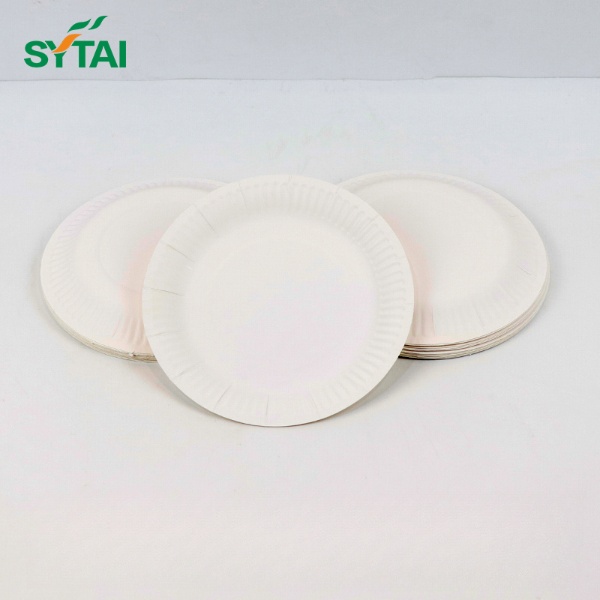
What are the different types of paper plates?Purchase Guide
Not sure which paper plates to buy? This complete guide covers all types of disposable paper plates—from compostable paper plates to heavy-duty dinner plates. Learn how to choose eco friendly disposable plates for your restaurant, catering business, or event.