Paper Popcorn Buckets 2026: PFAS, 85 oz & Cost per Serve
 123123123
Paper Popcorn Buckets in 2026
The anatomy of a paper popcorn bucket
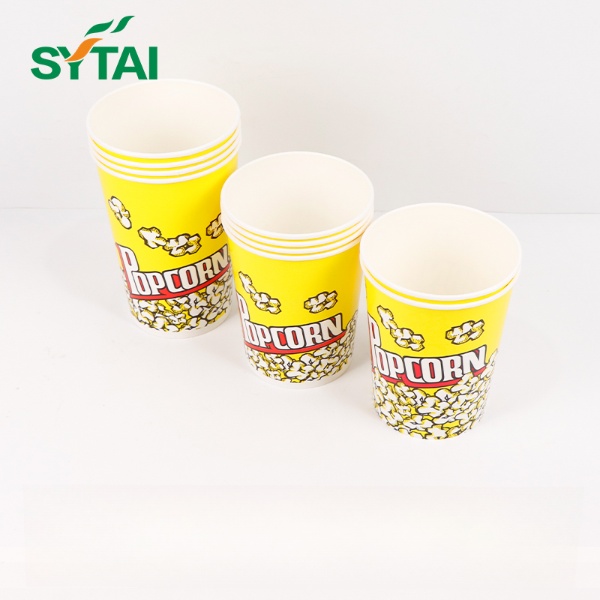
The number is not arbitrary. An 85 oz bucket (roughly 2.5 L) holding 12 oz of popped corn has to resist panel bulge and rim softening for the length of a feature film; below 280 gsm, the side wall starts to bow once the corn is hot and the butter is on. Above 350 gsm you are paying for stiffness nobody sees.
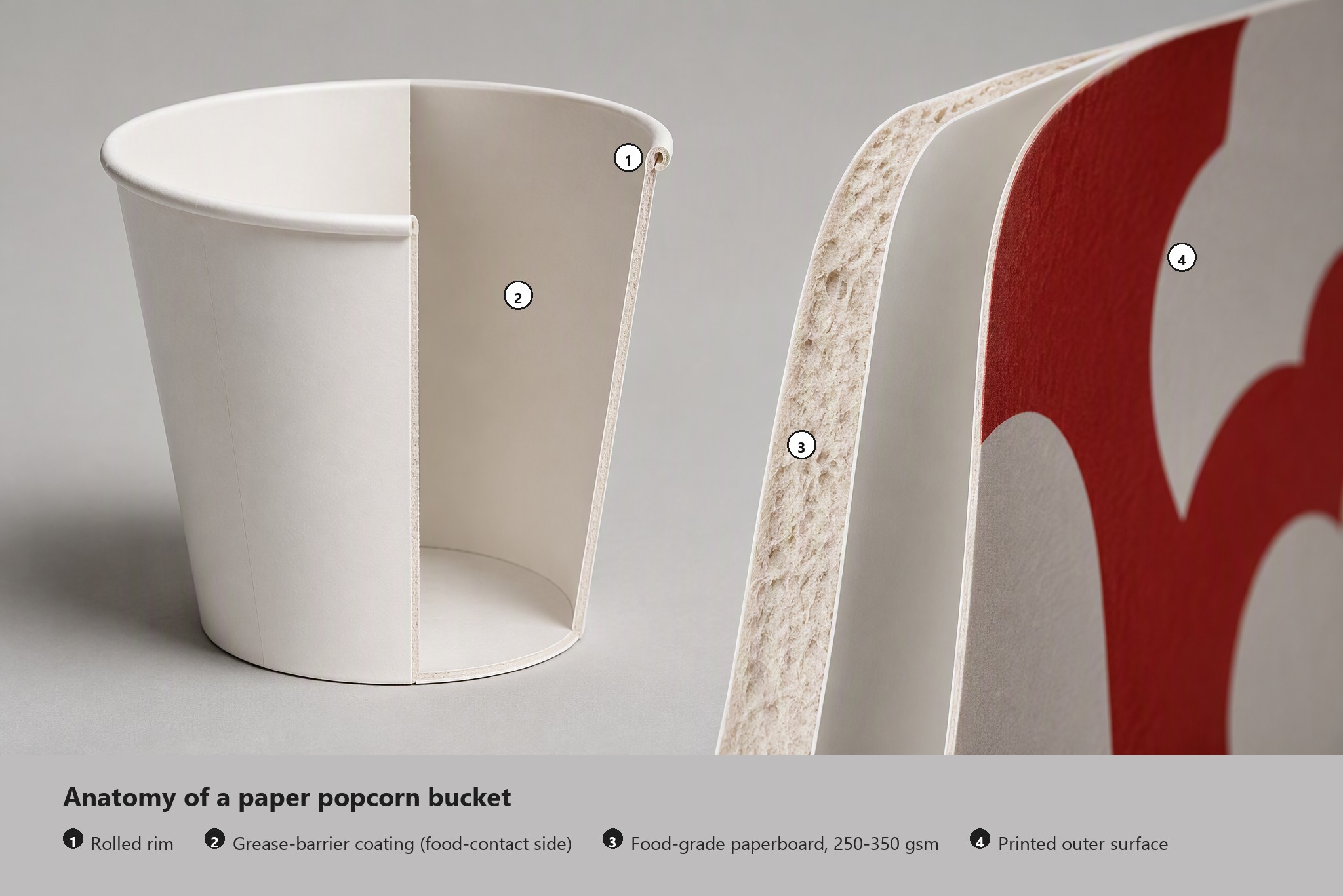
PLA (polylactic acid) lining — industrially compostable, increasingly requested by European chains. Its practical ceiling is heat: keep the fill temperature moderate and it performs; abuse it and the seam is the first thing to go.
Water-based acrylic dispersion coating — the PFAS-free workhorse. Recyclable in fiber streams in many markets and adequate for popcorn's grease load, but the grease barrier is lower than PE, so the board grade has to compensate.
The PFAS reset: why coating is now a purchasing decision
In the United States, the FDA announced on 28 February 2024 that grease-proofing substances containing PFAS are no longer being sold by manufacturers for food-contact use — the endpoint of a voluntary phase-out that began in 2020. In practice, "PFAS-free" moved from a marketing claim to a baseline expectation.
In the European Union, food-contact packaging placed on the market from 12 August 2026 is subject to specific PFAS limits, with thresholds reported at the 25 parts-per-billion level for individual substances. Several U.S. states — California, Minnesota and Maine among them — have layered their own restrictions on top.
The purchasing consequence is simple and often missed: a certificate of analysis is no longer enough. Ask for a declaration of compliance that names the coating chemistry, plus a total-organic-fluorine test report. If a quote arrives with "eco-friendly greaseproof paper" and nothing else, that is a documentation gap you will inherit at the port, not at the printer.
Custom popcorn boxes: what buyers actually specify
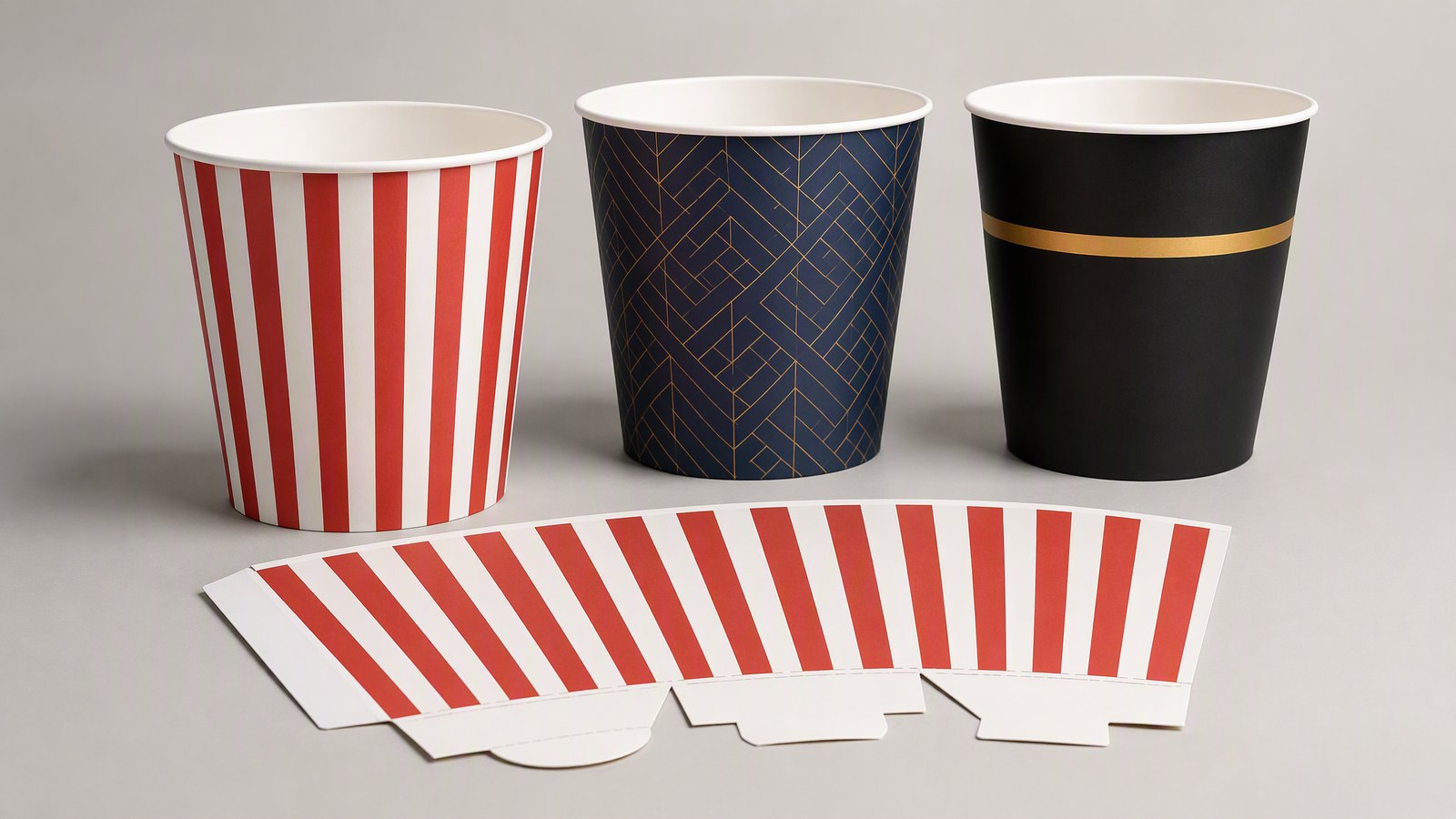
Dieline and flat size. Bucket geometry (tapered, glued side seam) versus a flat-fold popcorn box changes nesting ratio and therefore freight. Always approve a physical white sample, not a PDF.
Print method. Flexo for high-volume solid coverage and cost efficiency; offset when the artwork carries fine halftones or small legal copy. Four to six colors covers most concession programs.
Food-contact ink discipline. Inks and varnishes must be food-contact compliant, and print should stop short of the rim where lips meet the board.
Run length reality. Custom printed popcorn boxes generally need a meaningful volume to absorb plate and setup cost; below that, stock white or red-and-yellow buckets with a label are the cheaper path. This is the single most common misquote we see — a buyer asks for six-color print on 5,000 pieces and is surprised by the unit price.
Where paper popcorn buckets win
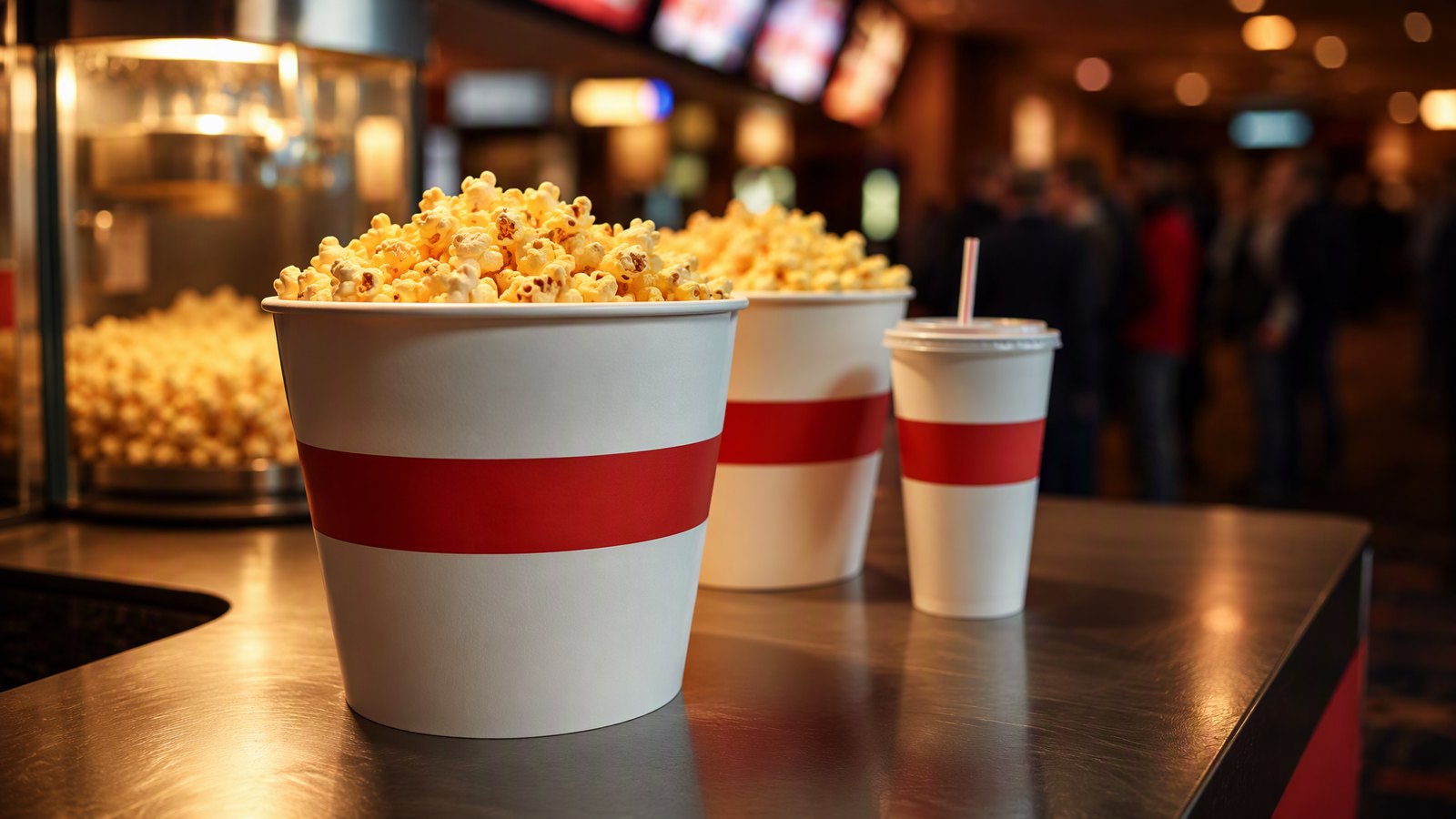
- Cinema chains — 85 oz and 130 oz dominate; combo programs pair the bucket with a 32–44 oz cup. Collectible series need heavier board and tighter print registration because the bucket is resold as merchandise.
- Drive-ins and independent theaters — 64 oz is the workhorse; grease barrier matters more than stiffness because hold times are longer.
- Theme parks and IP programs — the bucket is a souvenir first and a container second. Lids, handles and heavier caliper enter the spec.
- Parties, catering and events — small-format popcorn containers and popcorn bar containers (2–6 oz) dominate, and butter/oil resistance is the failure mode that generates complaints.
- Snack brands and DTC — printed popcorn boxes do shelf and unboxing duty at once; barrier and print durability outrank cost per unit.
- Stadiums and convenience — vented lids and stackability decide pallet efficiency more than wall thickness does.
The export picture for 2026
- Order splitting. Instead of one annual container, buyers now run a main program plus buffer stock, which pushes paper popcorn buckets wholesale orders toward smaller, more frequent releases and puts pressure on minimum run lengths.
- Landed cost, not FOB. More North American buyers quote DDP and ask suppliers to model duty and inland freight. Confirm the HS classification with your broker — paperboard cartons sit in Chapter 48 — and price the declaration, not just the goods.
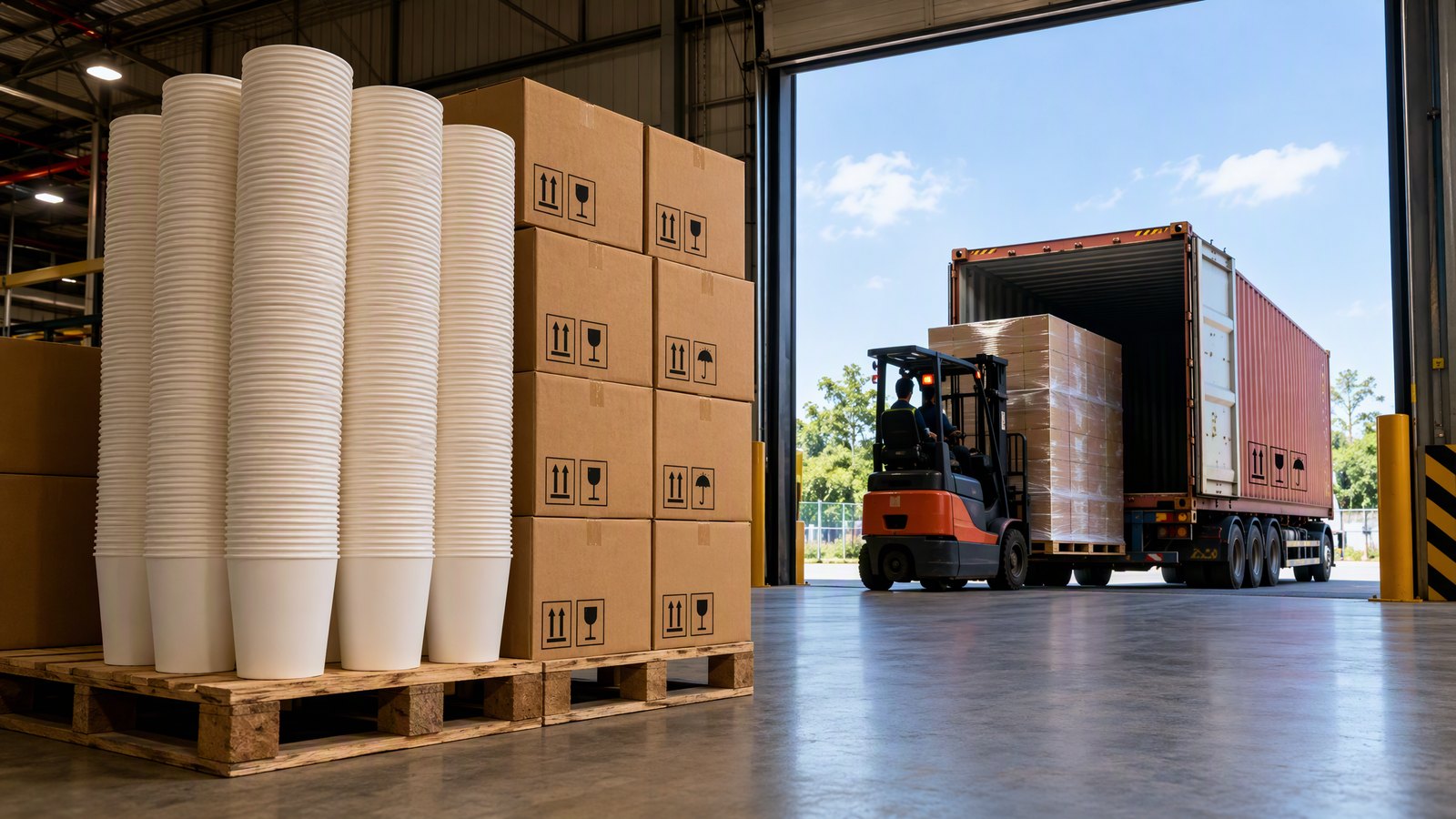
- Nesting as a freight strategy. Buckets ship nested; flat-fold popcorn boxes ship flat. The difference in container utilization is large enough that the "cheaper" unit price can lose on freight. Model cubic meters, not pieces.
- Documentation as a differentiator. FSC chain-of-custody, food-contact declarations, PFAS test reports and a current audit certificate now decide shortlists as often as price does.
FAQ
Are paper popcorn buckets recyclable? The paper body is; the outcome depends on the coating. PE-lined buckets usually fail fiber recycling, PLA needs industrial composting, and water-based coated board is the most recyclable option in mixed municipal streams. State the coating, not the word "eco."
What is the most common size? 85 oz for cinema, 64 oz for smaller venues, 130 oz for sharing formats. Popcorn containers in 2–6 oz cover parties and popcorn bars.
Can they replace plastic popcorn boxes? For dry and butter-topped popcorn, yes — the constraint is grease barrier and hold time, not the paper itself. Reusable popcorn containers still win where the venue washes and reissues them.
Why does the same bucket quote differ by 300%? Almost always board grade and coating, not labor. Ask for both, in writing.