


123123123
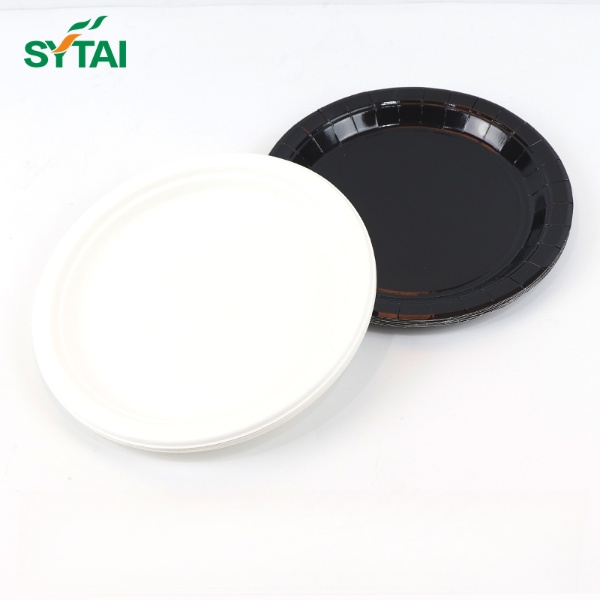 123123123
Most people guess recycling. Most of the time, that guess is wrong — and it's not because you did anything wrong. It's because the answer depends on two things almost nobody talks about: the coating on the plate, and what you just ate off it.
Here's the straight version, without the greenwashing.
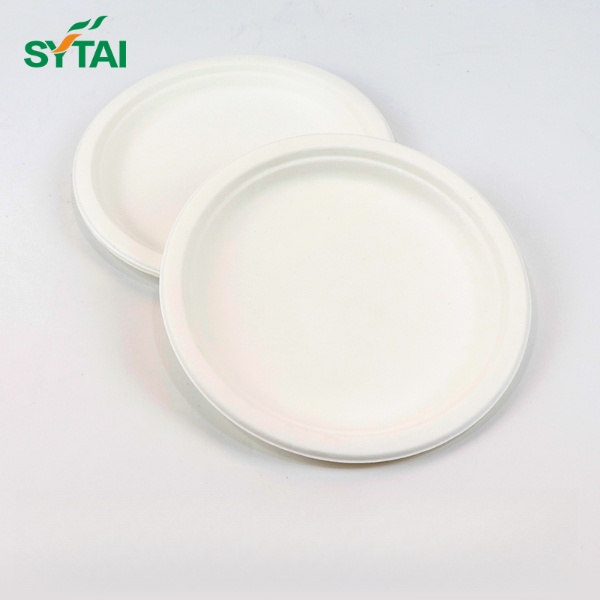
One — the coating. Most disposable paper plates are lined with a thin layer of polyethylene, or increasingly a plant-based PLA film, to stop sauce from soaking through. That film is plastic. Mills that turn recovered paper into new pulp can't easily separate it, and a batch with too much plastic film gets downgraded or rejected.
Two — the grease. Food residue is the quiet killer of paper recycling. A plate with oil, cheese, or sauce on it contaminates the fiber. Mills pay for clean recovered paper because clean fiber makes clean pulp; greasy fiber doesn't.
Three — the size. Small, light, flat items often fall through the sorting screens at a materials recovery facility. A six-inch plate behaves a lot like a piece of junk mail: it gets screened out before anyone can sort it.
So when someone asks whether paper plates are recyclable, the honest answer is: the material says yes, the system says no. That gap is exactly why so many of them end up in landfill even in cities with ambitious recycling targets.
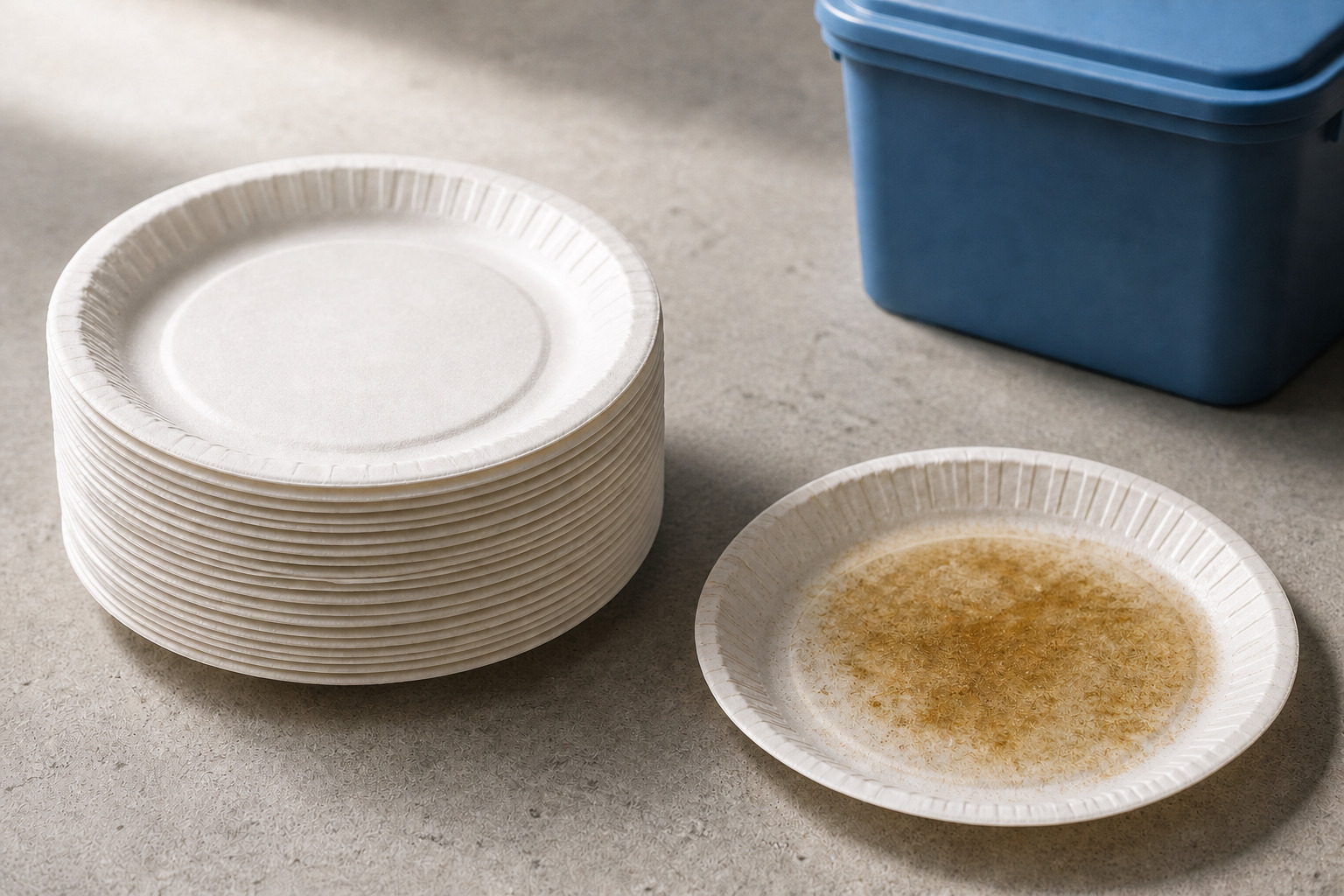
Tear it. If the plate tears like paper and shows a matte, fibrous edge, it's probably uncoated. If you see a shiny film peeling away, it's coated — bin it.
Never stack wet plates. Moisture is the fastest way to ruin a whole bag of recyclables.
Check your local program, not a blog. Curbside rules differ by city and by hauler, and they change. One phone call beats ten articles, including this one.
And one more: the recycling symbol on the package usually refers to the carton, not the plate. Don't read it as permission.
Condition 1: the plate must be labeled compostable. "Biodegradable" is not the same claim. Biodegradable only means it will eventually break down, with no promise about how long or under what conditions. Compostable means it breaks down within a defined timeframe, in a defined environment, leaving no toxic residue.
Condition 2: the facility has to accept it. Home compost piles rarely get hot enough for coated or thick molded fiber products. Industrial composting does. If your city doesn't collect food waste, a compostable plate in the trash bin is still a plate in landfill.
Condition 3: no plastic on the plate. A compostable plate with a plastic fork and a plastic-laminated napkin on top is contamination. Compost the plate, bin the rest.
If those three line up, composting is a genuinely better ending than recycling for this product category. If they don't, the most honest option is to buy fewer, better plates and reuse the ones you can.
If you are sourcing disposable paper plates and want the unvarnished truth about coatings, certifications, and end-of-life disposal, get in touch with us. We’d much rather help you get it right the first time than see you get it wrong twice.
Are Paper Plates Recyclable? The Honest Answer
2026-10-27
123123123
Are Paper Plates Recyclable? The Honest Answer
You finish a plate of pasta, walk to the bin, and pause for half a second. Paper plate in hand. Recycling or trash?
Most people guess recycling. Most of the time, that guess is wrong — and it's not because you did anything wrong. It's because the answer depends on two things almost nobody talks about: the coating on the plate, and what you just ate off it.
Here's the straight version, without the greenwashing.
Can You Recycle Paper Plates?
Short answer: technically yes, practically almost never.
A plain, uncoated paper plate is just paper. Paper is recyclable. So in theory, a clean paper plate could go into the same stream as a cereal box.
In practice, three things block it.
A plain, uncoated paper plate is just paper. Paper is recyclable. So in theory, a clean paper plate could go into the same stream as a cereal box.
In practice, three things block it.
One — the coating. Most disposable paper plates are lined with a thin layer of polyethylene, or increasingly a plant-based PLA film, to stop sauce from soaking through. That film is plastic. Mills that turn recovered paper into new pulp can't easily separate it, and a batch with too much plastic film gets downgraded or rejected.
Two — the grease. Food residue is the quiet killer of paper recycling. A plate with oil, cheese, or sauce on it contaminates the fiber. Mills pay for clean recovered paper because clean fiber makes clean pulp; greasy fiber doesn't.
Three — the size. Small, light, flat items often fall through the sorting screens at a materials recovery facility. A six-inch plate behaves a lot like a piece of junk mail: it gets screened out before anyone can sort it.
So when someone asks whether paper plates are recyclable, the honest answer is: the material says yes, the system says no. That gap is exactly why so many of them end up in landfill even in cities with ambitious recycling targets.
Paper Plates Recycle Rules: Why Grease Kills the Batch
If you want to recycle paper plates anyway, there's a narrow path, and it starts with being ruthless about condition.
A plate can sometimes be accepted if it is uncoated, completely clean, and dry. That means no oil sheen, no dried sauce ring, no cheese stuck to the rim. A plate that held a dry sandwich or a slice of plain cake? Maybe. A plate that held fried chicken? No — and putting it in the bin doesn't just fail, it can pull down the rest of the load.
A few rules worth taping to the inside of your cabinet:
Scrape first, don't rinse. Rinsing wastes water and doesn't fix grease saturation.
Tear it. If the plate tears like paper and shows a matte, fibrous edge, it's probably uncoated. If you see a shiny film peeling away, it's coated — bin it.
Never stack wet plates. Moisture is the fastest way to ruin a whole bag of recyclables.
Check your local program, not a blog. Curbside rules differ by city and by hauler, and they change. One phone call beats ten articles, including this one.
And one more: the recycling symbol on the package usually refers to the carton, not the plate. Don't read it as permission.
Can You Compost Paper Plates?
Yes — with conditions, and the conditions matter more than the yes.
Condition 1: the plate must be labeled compostable. "Biodegradable" is not the same claim. Biodegradable only means it will eventually break down, with no promise about how long or under what conditions. Compostable means it breaks down within a defined timeframe, in a defined environment, leaving no toxic residue.
Condition 2: the facility has to accept it. Home compost piles rarely get hot enough for coated or thick molded fiber products. Industrial composting does. If your city doesn't collect food waste, a compostable plate in the trash bin is still a plate in landfill.
Condition 3: no plastic on the plate. A compostable plate with a plastic fork and a plastic-laminated napkin on top is contamination. Compost the plate, bin the rest.
If those three line up, composting is a genuinely better ending than recycling for this product category. If they don't, the most honest option is to buy fewer, better plates and reuse the ones you can.
| Situation | What to do |
|---|---|
| Uncoated, clean, dry | Try the paper bin — local rules permitting |
| Coated (shiny film), any food residue | Trash |
| Labeled compostable + city collects food waste | Food waste bin |
| Labeled compostable, no collection | Trash — don't wish-cycle |
| Unsure | Trash. One wrong plate can spoil a batch |
Recycling a paper plate isn’t a test of your morality; it’s a question of materials. The answer is determined long before you even pick up the plate—it’s set back on the production line where the barrier coating is applied.
That is precisely why we include the specifications for our barrier layers directly on every product page, rather than burying them in some PDF that no one will ever read.
If you are sourcing disposable paper plates and want the unvarnished truth about coatings, certifications, and end-of-life disposal, get in touch with us. We’d much rather help you get it right the first time than see you get it wrong twice.
Industry News - October 21, 2026
Paper Popcorn Buckets 2026: PFAS, 85 oz & Cost per Serve
A paper popcorn bucket is decided by board grade, coating chemistry and cost per serve, not by the word eco-friendly. 2026 guide: PFAS rules, custom print, 85 oz specs and export freight.
Industry News - October 19, 2026
Fast Food Paper Bag Guide: Packaging Solutions
Choosing take out paper bags? Compare kraft, PE-coated and compostable options, sizing and food-safety checks in Sytai's buyer guide.
Industry News - October 13, 2026
What is a paper cup sleeve? What is a cup sleeve used for?
What is a paper cup sleeve? A B2B purchasing guide covering materials, selection, and usage scenarios.We invite interested buyers to explore our latest product information; we are confident we can provide you with the best solutions.