


123123123
 123123123
This guide is written for those actually signing the purchase orders: café owners transitioning away from paper straws; bubble tea chains standardizing on 12mm-diameter straws; distributors looking to add a compostable product line; and importers whose retail clients require proof of certification before agreeing to stock the items.
The content covers what these materials actually are, whether they truly biodegrade, how they compare to paper or polypropylene (PP) straws in terms of performance, and which straw diameters are best suited for specific types of drinks.
Because the input is starch, the material is food-grade and BPA-free, and it is not a paper product with a plastic liner. That distinction matters in procurement, because a paper straw with a polyethylene or acrylic coating often fails industrial composting tests while still being marketed as "eco". Ask which polymer is specified, not which colour the box is.
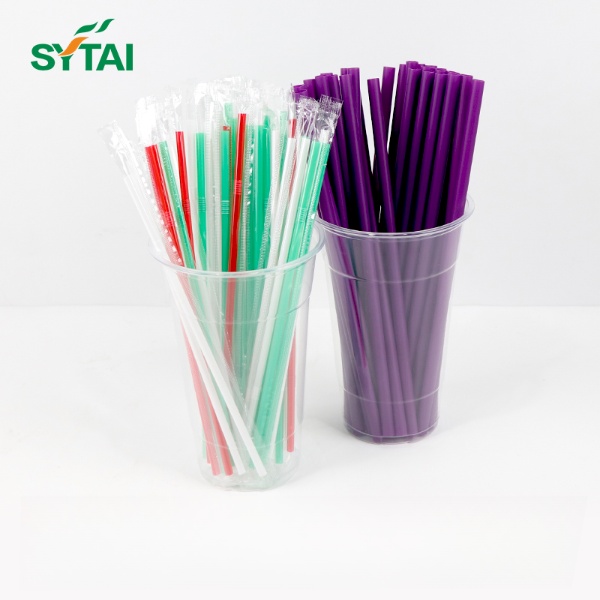
Three plant-based families dominate the category. PLA is the workhorse: rigid, glossy, neutral in taste, and the cheapest of the compostable options at volume. CPLA (crystallised PLA) is heat-treated to hold shape above the 80 °C (176 °F) ceiling of standard PLA, at a higher unit cost. PHA composts in a wider range of environments, including soil and marine conditions, but is several times more expensive and rarely used for a disposable straw. Sugarcane and bamboo fibre sit in a different category altogether — moulded, not extruded — and are not available in thin 4 mm and 5 mm bores.
1. Home composting is not the same as industrial composting. While PLA straws can break down in a backyard compost pile (at 20–30°C), the process takes years rather than months. If your end customers are likely to dispose of straws in a home compost bin or a general trash can, any claim of being "compostable" on your packaging or menu must be qualified with specific context.
2. Landfilling is just landfilling. When buried underground without oxygen, even certified compostable products degrade extremely slowly. "Compostable" describes a pathway toward a specific end-of-life destination; it is not an inherent, magical property of the material itself.
3. PLA does not belong in the standard plastics recycling stream. It is neither PET nor PP; placing it in a recycling bin for plastic bottles or containers constitutes contamination. Disposal instructions for customers should be concise and clear: if industrial composting collection is available, dispose of it there; otherwise, place it in the general trash—never in the recycling bin.
This also addresses the frequently searched question of "how should I dispose of my straw?" The material determines the appropriate disposal bin, and the disposal method determines whether you can legally label your packaging as "compostable." Businesses that have a contract with a commercial composting service may fully utilize "compostable" claims; however, businesses whose waste ends up in a landfill should instead use terms like "plant-based"—the word "compostable" should not appear in any consumer-facing messaging.
Compostable Straws: PLA vs Paper, Bulk Cost & Buying Guide
2026-11-21
123123123
Compostable Straws: A Practical Guide to PLA Straws for Wholesale Buyers
Compostable straws are drinking straws made from plant-based polymers, designed to break down in industrial composting facilities rather than persisting in a landfill for centuries.
The type most frequently specified in food and beverage procurement today is the PLA (polylactic acid) straw. These are made by polymerizing lactic acid—derived from the fermentation of corn starch or cassava—and extruding it into smooth-surfaced tubes. In a cup, they perform just like plastic straws, yet they come with a verifiable end-of-life profile.
The type most frequently specified in food and beverage procurement today is the PLA (polylactic acid) straw. These are made by polymerizing lactic acid—derived from the fermentation of corn starch or cassava—and extruding it into smooth-surfaced tubes. In a cup, they perform just like plastic straws, yet they come with a verifiable end-of-life profile.
This guide is written for those actually signing the purchase orders: café owners transitioning away from paper straws; bubble tea chains standardizing on 12mm-diameter straws; distributors looking to add a compostable product line; and importers whose retail clients require proof of certification before agreeing to stock the items.
The content covers what these materials actually are, whether they truly biodegrade, how they compare to paper or polypropylene (PP) straws in terms of performance, and which straw diameters are best suited for specific types of drinks.
What Are Compostable Straws Made Of?
Compostable straws are made from polymers whose carbon comes from plants, not from oil. In the PLA case the chain runs: corn or cassava starch → glucose → fermentation to lactic acid → polymerisation into PLA resin pellets → melt extrusion into a tube → cutting, bending and wrapping.
Because the input is starch, the material is food-grade and BPA-free, and it is not a paper product with a plastic liner. That distinction matters in procurement, because a paper straw with a polyethylene or acrylic coating often fails industrial composting tests while still being marketed as "eco". Ask which polymer is specified, not which colour the box is.
Three plant-based families dominate the category. PLA is the workhorse: rigid, glossy, neutral in taste, and the cheapest of the compostable options at volume. CPLA (crystallised PLA) is heat-treated to hold shape above the 80 °C (176 °F) ceiling of standard PLA, at a higher unit cost. PHA composts in a wider range of environments, including soil and marine conditions, but is several times more expensive and rarely used for a disposable straw. Sugarcane and bamboo fibre sit in a different category altogether — moulded, not extruded — and are not available in thin 4 mm and 5 mm bores.
Are PLA Straws Biodegradable? What Composting Actually Requires
Yes—but only under the conditions specified by the relevant certifications. PLA straws are the most frequently designated biodegradable straw in the food and beverage industry precisely because their degradation pathway is definable and verifiable, rather than being merely a marketing slogan on the packaging. They require the sustained high temperatures and microbial activity found in commercial composting facilities—typically 55–60°C, with controlled moisture levels and aeration. Standards such as Europe’s EN 13432 and the United States’ ASTM D6400 require products to meet specific disintegration and biodegradation benchmarks within a set testing period; in a properly managed compost pile, PLA straws generally break down completely within 3 to 6 months.
1. Home composting is not the same as industrial composting. While PLA straws can break down in a backyard compost pile (at 20–30°C), the process takes years rather than months. If your end customers are likely to dispose of straws in a home compost bin or a general trash can, any claim of being "compostable" on your packaging or menu must be qualified with specific context.
2. Landfilling is just landfilling. When buried underground without oxygen, even certified compostable products degrade extremely slowly. "Compostable" describes a pathway toward a specific end-of-life destination; it is not an inherent, magical property of the material itself.
3. PLA does not belong in the standard plastics recycling stream. It is neither PET nor PP; placing it in a recycling bin for plastic bottles or containers constitutes contamination. Disposal instructions for customers should be concise and clear: if industrial composting collection is available, dispose of it there; otherwise, place it in the general trash—never in the recycling bin.
This also addresses the frequently searched question of "how should I dispose of my straw?" The material determines the appropriate disposal bin, and the disposal method determines whether you can legally label your packaging as "compostable." Businesses that have a contract with a commercial composting service may fully utilize "compostable" claims; however, businesses whose waste ends up in a landfill should instead use terms like "plant-based"—the word "compostable" should not appear in any consumer-facing messaging.
PLA vs Paper vs Plastic Straws: Strength, Cost and End of Life
| Criteria | PLA (plant-based) | Paper | PP plastic |
|---|---|---|---|
| Mouthfeel | Smooth, glossy, plastic-like | Dry, textured, can taste papery | Smooth |
| After 30 minutes in iced drink | Holds shape and bore | Softens, may collapse at the bend | Holds shape |
| Heat tolerance | Up to 80 °C (176 °F) | Moderate; degrades faster when hot | High |
| End of life | Industrial composting, 3–6 months | Recyclable or compostable depending on coating | Landfill, persists for centuries |
| Unit cost | Mid | Low to mid | Low |
| Best fit | Chains with composting access or a sustainability claim | Short drinks, budget programmes | Markets without plastic restrictions |
Which Straw Diameter for Which Drink?
Diameter is a functional decision, not a cosmetic one. Too narrow and pearls jam; too wide and a cold brew pulls too fast and tastes thin. The standard length across the range is 210 mm, which suits the 12–24 oz cups used by most cafés and tea shops.
| Diameter | Typical use | Packing | Carton (cm) |
|---|---|---|---|
| 4 mm × 210 mm | Espresso, cocktail service, kids' drinks | 5,000 pcs | 50 × 36 × 27.5 |
| 5 mm × 210 mm | Iced americano, cold brew, iced latte | 5,000 pcs | 51 × 36 × 27.5 |
| 6 mm × 210 mm | Standard beverage, fruit tea, soft drinks | 5,000 pcs | 53.5 × 36 × 27.5 |
| 8 mm × 210 mm | Smoothies, juice, blended drinks | 5,000 pcs | 50 × 47 × 27.5 |
| 10 mm × 210 mm | Bubble tea, small tapioca pearls, jelly | 5,000 pcs | 44 × 35 × 51.5 |
| 12 mm × 210 mm | Large tapioca pearls, popping boba, toppings | 5,000 pcs | 45 × 38 × 51.5 |
This is also why boba straws are sold in 10 mm and 12 mm rather than the 6 mm beverage standard — the bore has to clear the topping, not just the liquid.
The question "how wide is a boba straw" therefore has a practical answer: 12 mm is the safe default for standard tapioca pearls at 10 mm and above, and 10 mm works for smaller pearls, coconut jelly and popping boba where the topping is under 8 mm.
If your menu runs both a classic pearl milk tea and a fruit tea with pulp, specify both diameters rather than forcing one — the cost difference per carton is trivial next to a clogged straw at the counter. Pre-packed 12 mm boba straws are the usual starting point for a sealed-lid pearl menu.
Compostable Straws Bulk: MOQ, Cartons and What Drives the Price
Compostable straws bulk purchasing comes down to four variables: resin price, gram weight, packaging format and freight volume. Everything else is negotiation.
The minimum order for a direct-factory run is typically 100,000 pieces — twenty cartons at 5,000 pieces each. That is not an arbitrary threshold; it is the point at which a custom colour or a printed wrap becomes economic to set up. Stock colours ship in smaller quantities.
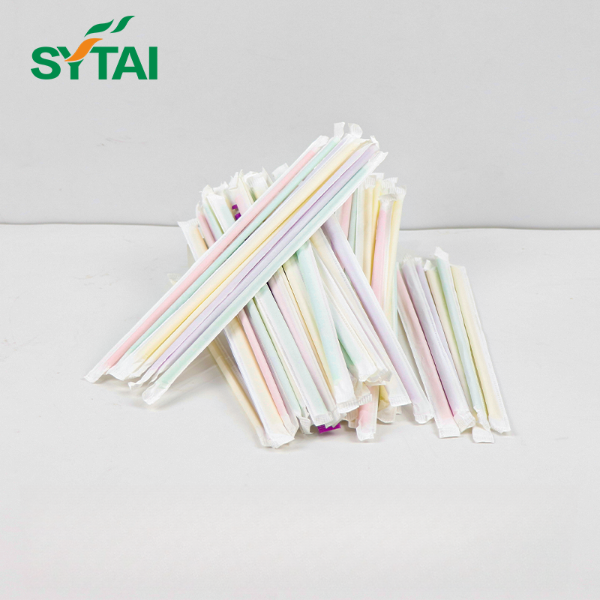
The other lever is wrapping. An individually paper-wrapped straw adds a wrapping line, a paper cost and slower output, and it is the format hotels, airlines and hygiene-sensitive accounts ask for. Unwrapped bulk cartons are cheaper per piece but only work where the straw sits behind a counter in a dispenser.
Custom printing — up to seven colours on the paper wrap or the display carton — carries a plate or digital setup charge, so it belongs on high-volume, long-life SKUs rather than seasonal menus.
Current carton and wrapping options for compostable drinking straws wholesale are listed on the product page, including the 100,000-piece minimum.
Industry News - November 17, 2026
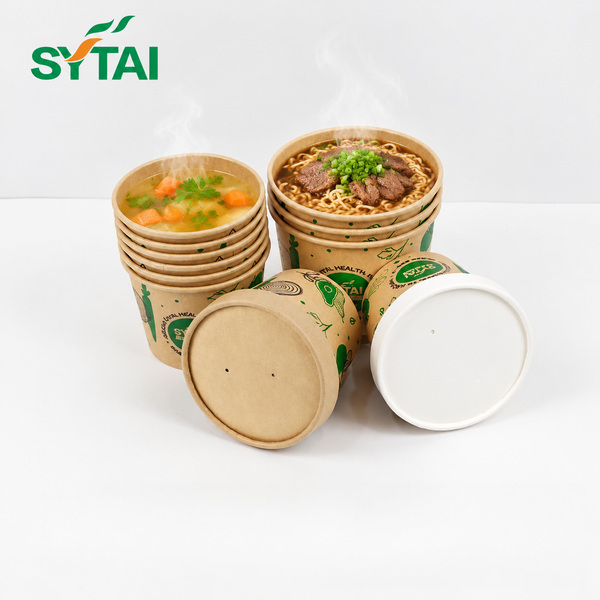
Paper Soup Containers With Lids: A Catering Buyer's Guide to Fewer Leaks and Lower Cost per Serving
This guide is written from the perspective of the front lines of production, not from a product catalog. It covers exactly where leakage begins, three sets of figures worth comparing before even looking at price, and how to build a coverage strategy that remains robust despite staff turnover.

Industry News - November 13, 2026
Paper Ice Cream Cups: Sizes, Lids & Wholesale B2B Guide
Leaking bases, cracked rims, popping lids: a spec-level guide to paper ice cream cups - sizes, coatings, carton cube, freight math and printing.
Industry News - November 11, 2026
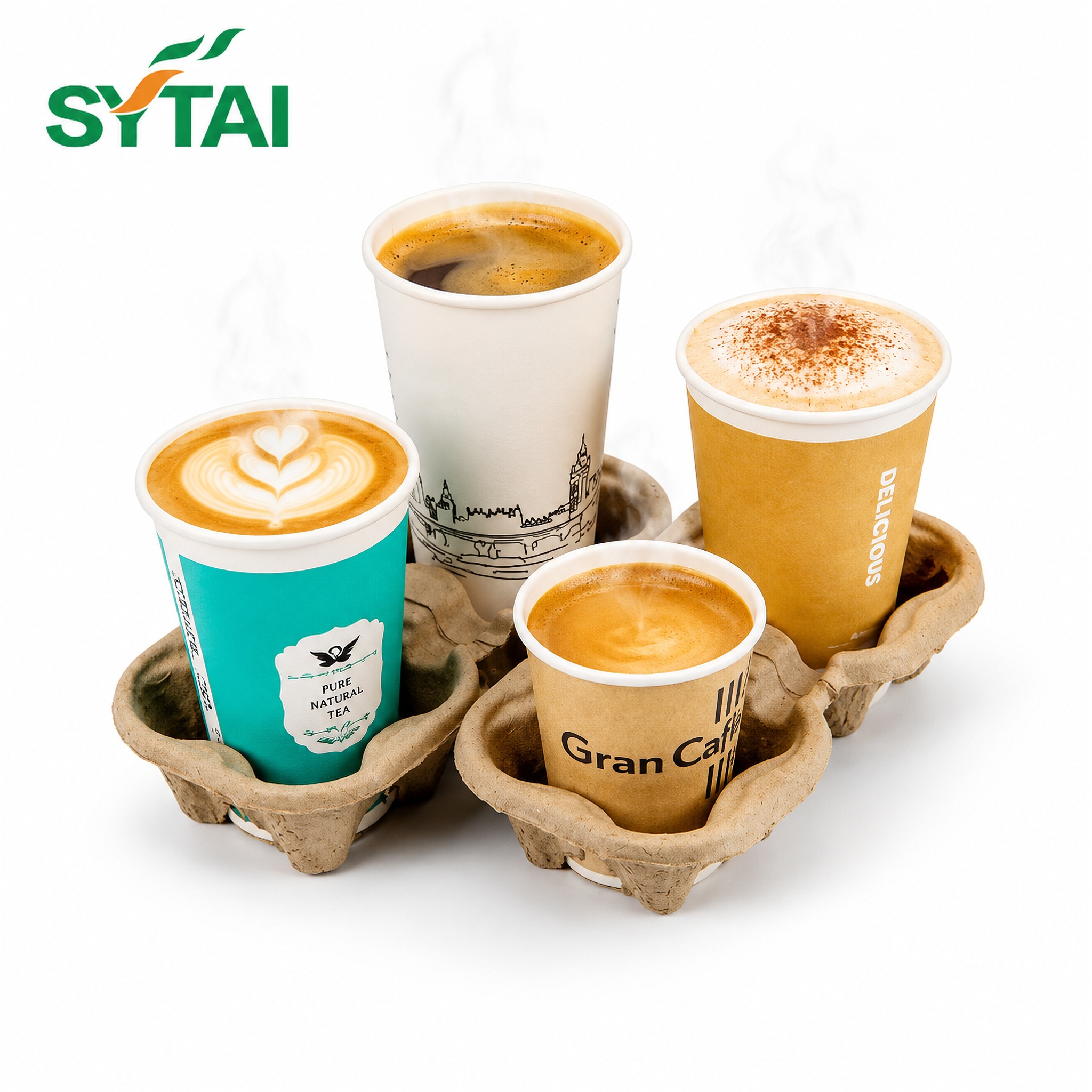
Single Wall Paper Cup: A Practical Guide to Sizes, Coatings and Wholesale Sourcing
What a single wall paper cup is, how it differs from double wall, which coating suits hot or cold drinks, and how to buy wholesale at lower cost.