


123123123
 123123123
To determine whether a noodle box meets quality standards, one need only evaluate three key criteria: the base must remain leak-proof after being filled with noodles and broth and left to sit for 30 minutes; the sidewalls must not cave inward when three such boxes are stacked; and the container must not deform by more than five degrees from its original shape upon opening.
If a box fails to meet these three benchmarks, it is merely a disposable, low-quality item—regardless of how attractive its printing may be. A common pitfall with paper-based packaging is that it may perform well in laboratory testing but fail during actual delivery; therefore, such packaging should always be validated using real food items rather than plain water.
When sourcing kraft paper boxes for food, you can avoid making the wrong choice by matching the three types of coatings listed below to the items on your menu.
Printing: Flexographic printing is ideal for 1–3 colors and large-volume runs, while offset printing is better suited for 4–6 colors and intricate designs. Each additional color increases costs in a nearly linear fashion.
Plate Costs: Custom printing plate fees are a one-time investment. When amortized over the total annual usage, the cost per unit is often negligible—just a fraction of a cent—whereas placing separate, smaller orders means incurring these costs repeatedly.
MOQ (Minimum Order Quantity): The MOQ is determined by both the dimensions of the box and the printing requirements. A common strategy to lower the burden of an initial order is to finalize the structural design first, while splitting the printing production into smaller batches.
Shipping: Shipping paper boxes in a flat, unfolded state allows for a significantly higher quantity per shipment compared to pre-assembled (formed) boxes, leading to substantial savings in ocean freight costs.
Paper Noodle Box Guide: Sizes, Materials & Wholesale
2026-11-09
123123123
What Is a Paper Noodle Box and What Does It Need to Handle?
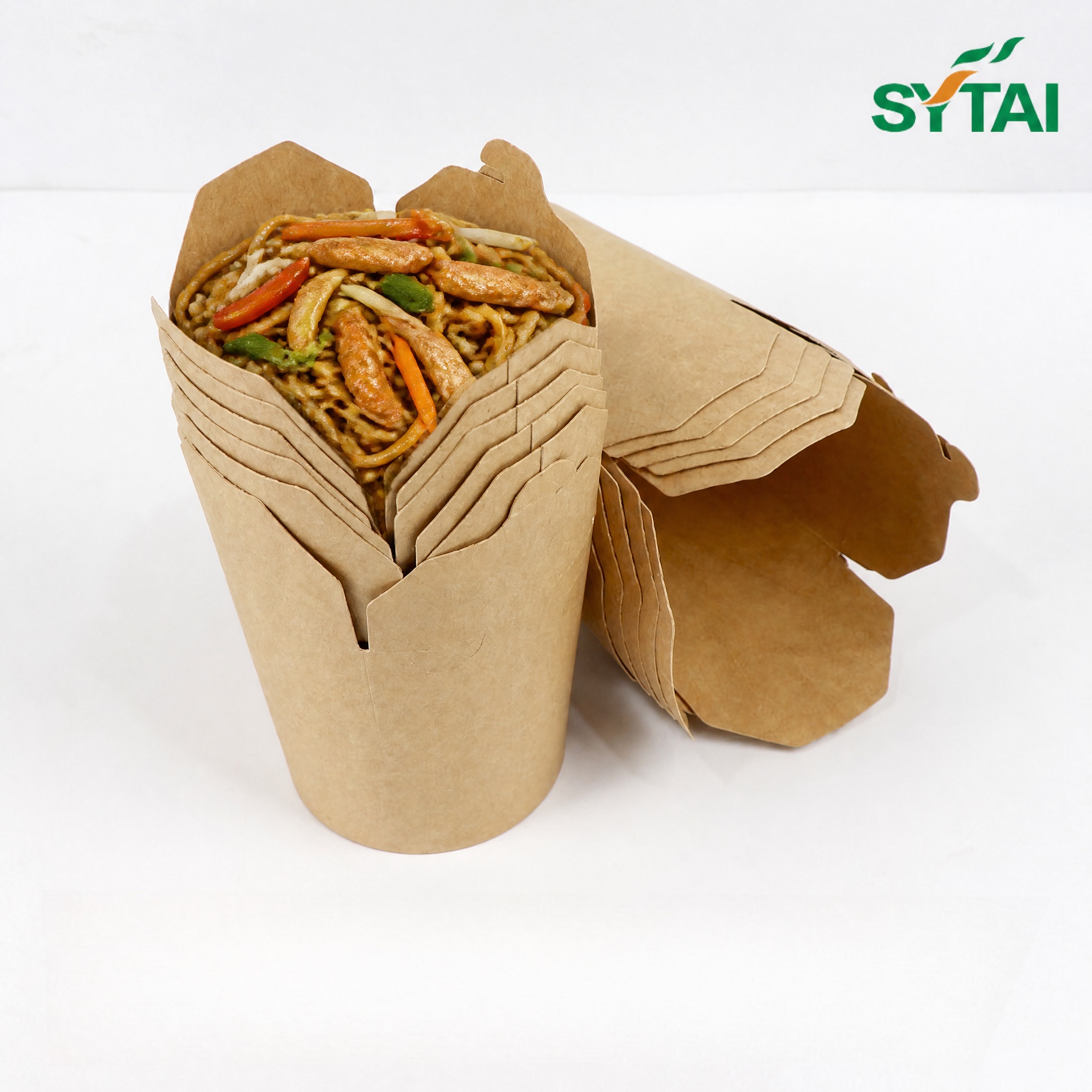
A "paper noodle box" is a folding carton manufactured from food-grade paperboard—die-cut, creased, and assembled—featuring a self-locking base and an interior moisture-resistant coating, specifically designed to hold noodle-based dishes.
While it may appear similar to a standard paper food container, it incorporates three specialized design features: a base-to-height ratio optimized for separating broth from noodles, a reinforced locking base capable of supporting greater weight, and vertical structural creases along the sidewalls for added rigidity.
While it may appear similar to a standard paper food container, it incorporates three specialized design features: a base-to-height ratio optimized for separating broth from noodles, a reinforced locking base capable of supporting greater weight, and vertical structural creases along the sidewalls for added rigidity.
To determine whether a noodle box meets quality standards, one need only evaluate three key criteria: the base must remain leak-proof after being filled with noodles and broth and left to sit for 30 minutes; the sidewalls must not cave inward when three such boxes are stacked; and the container must not deform by more than five degrees from its original shape upon opening.
If a box fails to meet these three benchmarks, it is merely a disposable, low-quality item—regardless of how attractive its printing may be. A common pitfall with paper-based packaging is that it may perform well in laboratory testing but fail during actual delivery; therefore, such packaging should always be validated using real food items rather than plain water.
Paper Noodle Box Sizes: Matching Capacity to Menu
Choosing capacity isn’t just about the number; it’s about the menu. For a 1000ml takeaway container, the specific design required depends on the dish: noodle soup calls for deep walls and a secure, tuck-in lid, while stir-fried noodles require a wide opening and a hinged lid—making it easy to pour the noodles directly in after stir-frying.
| Capacity | Best for | Cooked weight reference | Box style recommendation |
|---|---|---|---|
| 500 ml | Small noodle portions, kids' meals, side noodles | 150–200 g | Square base + integrated tuck lid |
| 750 ml | Single-serve stir-fried noodles, dry-tossed noodles, rice noodles | 250–300 g | Square base + vented tuck lid |
| 1000 ml | Noodle soup, ramen, hot & sour noodles | 300–380 g + broth | Square base + tab-lock lid (seal priority) |
| 1300 ml | Large pasta portions, double-serve chow fun, catering trays | 400–500 g | Round base + separate dome lid |
Kraft Paper Boxes for Food: Which Lining Fits Your Menu?
Whether a paper box is oil-resistant or microwave-safe depends on its coating, not the paperboard itself. For the very same paper noodle box, changing the type of coating can lead to significant differences in both cost and performance.
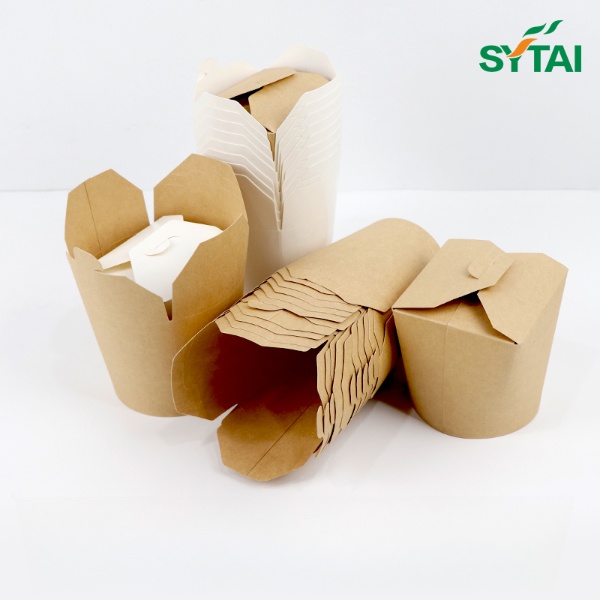
When sourcing kraft paper boxes for food, you can avoid making the wrong choice by matching the three types of coatings listed below to the items on your menu.
| Lining type | Grease resistance | Heat / microwave | Recycling path | Cost |
|---|---|---|---|---|
| PE lining | High — suits chili oil and curry dishes | Heat resistant, not recommended for microwave | Requires specialist processing | Low |
| Water-based coating | Medium — suits clear broth and tossed noodles | Short microwave reheating | Paper recycling stream | Medium |
| PLA lining | Medium-high — suits standard noodle dishes | Microwave safe (low-medium power) | Industrial composting | High |
If a restaurant’s core offerings are dishes like spicy chili-oil noodles or curry noodles, a PE (polyethylene) coating or a high-grammage grease-resistant coating is a more reliable choice.
If the brand focuses on "healthy takeout" and "biodegradability," PLA (polylactic acid) is the only solution that addresses both compostability and microwave compatibility—though this comes with higher costs.
Do not expect a single type of lining to work for the entire menu; using a mix of two different specifications is often more cost-effective than upgrading the entire product line.
Noodle Boxes Wholesale: What Drives the Price
Quotes for paper boxes of the same specifications can vary by as much as 100%. This price gap typically stems from five factors: paperboard basis weight, type of lamination (coating), printing method and number of colors, amortization of printing plate costs, and shipping format. Understanding these five elements is far more effective than repeatedly haggling over price.
Basis Weight: Increasing the weight from 250g to 300g raises the cost of the paper, but it also reduces complaints about corners collapsing; in the long run, this proves more cost-effective.
Printing: Flexographic printing is ideal for 1–3 colors and large-volume runs, while offset printing is better suited for 4–6 colors and intricate designs. Each additional color increases costs in a nearly linear fashion.
Plate Costs: Custom printing plate fees are a one-time investment. When amortized over the total annual usage, the cost per unit is often negligible—just a fraction of a cent—whereas placing separate, smaller orders means incurring these costs repeatedly.
MOQ (Minimum Order Quantity): The MOQ is determined by both the dimensions of the box and the printing requirements. A common strategy to lower the burden of an initial order is to finalize the structural design first, while splitting the printing production into smaller batches.
Shipping: Shipping paper boxes in a flat, unfolded state allows for a significantly higher quantity per shipment compared to pre-assembled (formed) boxes, leading to substantial savings in ocean freight costs.
FAQ
Can paper containers be put directly into a microwave?
It depends on the lining. Containers with a PLA lining can be heated for a short duration on low-to-medium power (with the lid removed); those with a PE lining are not recommended for microwave use; for water-based coatings, it depends on the supplier’s technical specifications.
It depends on the lining. Containers with a PLA lining can be heated for a short duration on low-to-medium power (with the lid removed); those with a PE lining are not recommended for microwave use; for water-based coatings, it depends on the supplier’s technical specifications.
Should soup and noodles be packed separately?
If the delivery time exceeds 20 minutes, it is recommended to pack them separately or use a container with a divider; otherwise, the noodles will absorb the liquid and swell, negatively affecting their texture.
If the delivery time exceeds 20 minutes, it is recommended to pack them separately or use a container with a divider; otherwise, the noodles will absorb the liquid and swell, negatively affecting their texture.
What is the minimum order quantity (MOQ)?
The MOQ is determined by factors such as dimensions, printing method, and the type of lining. Combining multiple designs for the same container type can help distribute plate-making costs; the exact figure will be calculated based on your specific requirements.
The MOQ is determined by factors such as dimensions, printing method, and the type of lining. Combining multiple designs for the same container type can help distribute plate-making costs; the exact figure will be calculated based on your specific requirements.
Industry News - October 27, 2026
Are Paper Plates Recyclable? The Honest Answer
Industry News - October 21, 2026
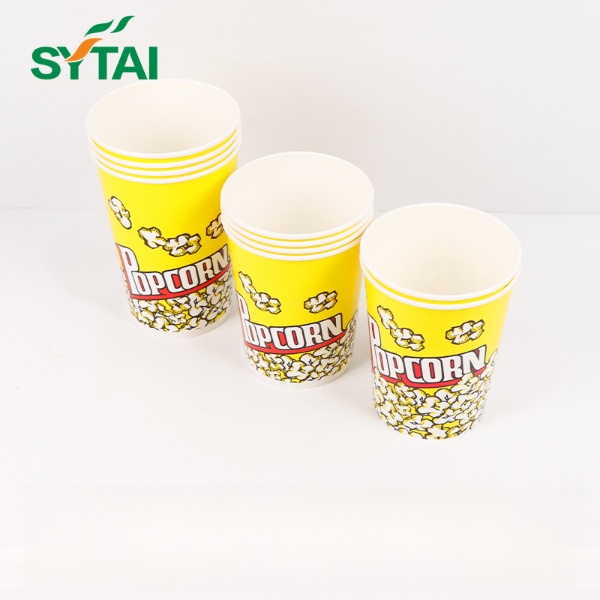
Paper Popcorn Buckets 2026: PFAS, 85 oz & Cost per Serve
A paper popcorn bucket is decided by board grade, coating chemistry and cost per serve, not by the word eco-friendly. 2026 guide: PFAS rules, custom print, 85 oz specs and export freight.
Industry News - October 19, 2026
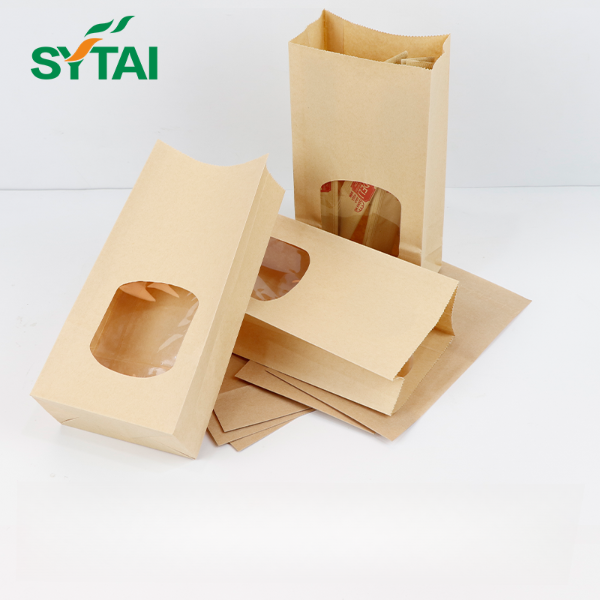
Fast Food Paper Bag Guide: Packaging Solutions
Choosing take out paper bags? Compare kraft, PE-coated and compostable options, sizing and food-safety checks in Sytai's buyer guide.