


123123123
 123123123
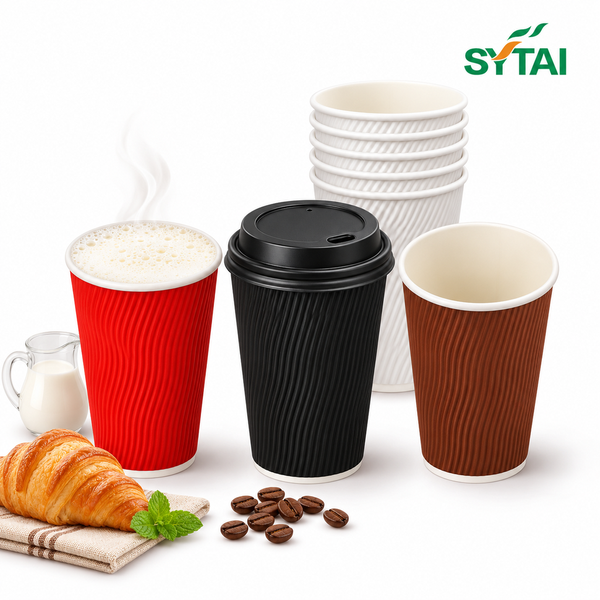
The result is a surface that rises and falls every few millimetres. On a flat-wall cup, a print roller meets a plane. On a ripple cup it meets a series of crests, and the ink film has to bridge them without starving the valleys. This is why a file that printed perfectly on a double wall cup can look patchy on a ripple body, and why the prepress stage on this product is longer than buyers expect.
The insulation logic behind that structure is covered separately in why ripple walls hold heat without a sleeve; this article stays on the printing.
SYTAI prints these cups by flexography in up to seven colours, CMYK or matched to a Pantone reference, using water-based inks on kraft or white board. Before plate-making, artwork is reviewed against the embossing: very fine hairlines and small type set across the ripple crest tend to break up, so those elements are moved onto the flat bands and a revised file is returned for approval. Nothing goes to plate until that revision is signed off.
The column that matters is the last one. A 22 oz cup occupies nearly twice the freight volume per piece of an 8 oz cup, so a mixed container priced on a single average freight rate per cup will be wrong in one direction or the other. Build the freight line per size, then add it back into the landed cost before comparing suppliers.
Drive-thru, kiosks and event bars. Grip matters when a customer takes the cup one-handed through a window or across a crowd. The corrugation is functional, not decorative.
Hotel, airline and corporate catering. One SKU replaces cup-plus-sleeve, which simplifies procurement and bin storage across sites.
Chains with a published sustainability target. Water-based or PLA lining plus FSC-certified paper gives a defensible story — provided the lining claim matches the disposal route actually available in that market. If you are comparing compostable substrates across the range, the same certification logic applies to compostable straws and PLA versus paper.
Printed Ripple Wall Coffee Cups With Logo | B2B Buyer Guide
2026-11-25
123123123
Printed Ripple Wall Coffee Cups With Logo: What to Fix Before the First Print Run
Most branded cup projects go wrong at the artwork stage, not on the production line.
A printed ripple wall coffee cup with your logo looks simple in a mock-up: a ribbed body, a clean print band, a lid that clicks on.
In production it is a three-layer construction with an embossed outer surface, and that single fact changes how ink sits, how fine detail survives, how the lid fits, and how much of your budget the plates eat before a single cup is formed.
Printed Ripple Wall Coffee Cups: Why the Body Is an Embossed Print Surface
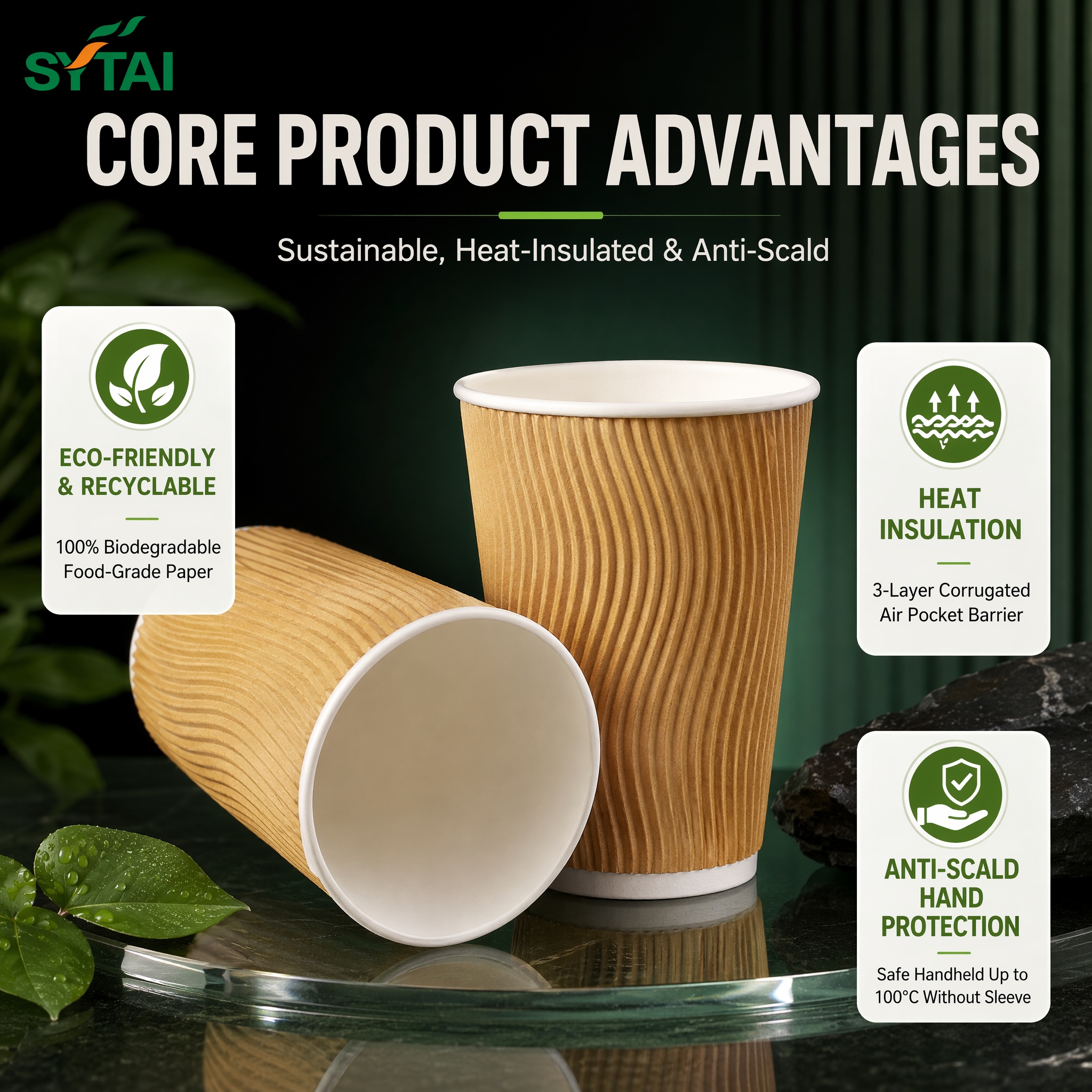
A ripple cup is built from three layers, not two. The inner layer is food-grade board with a coating that touches the drink. The middle layer is a corrugated sheet formed into a continuous ripple. The outer layer — the one carrying your logo — is printed board that has been bonded over that corrugation.
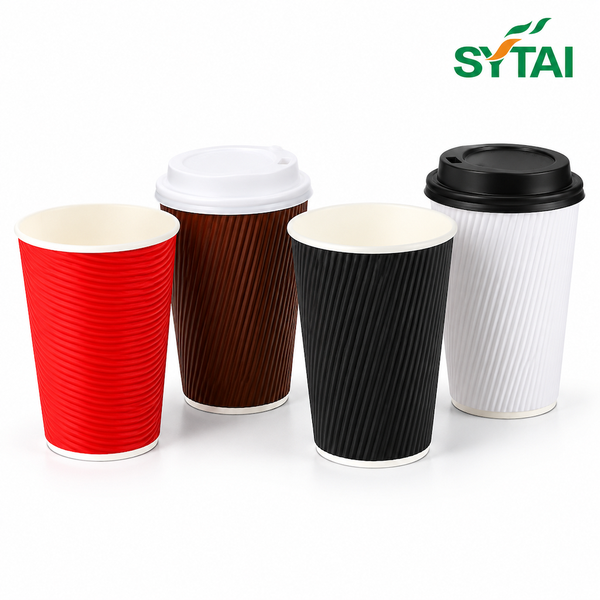
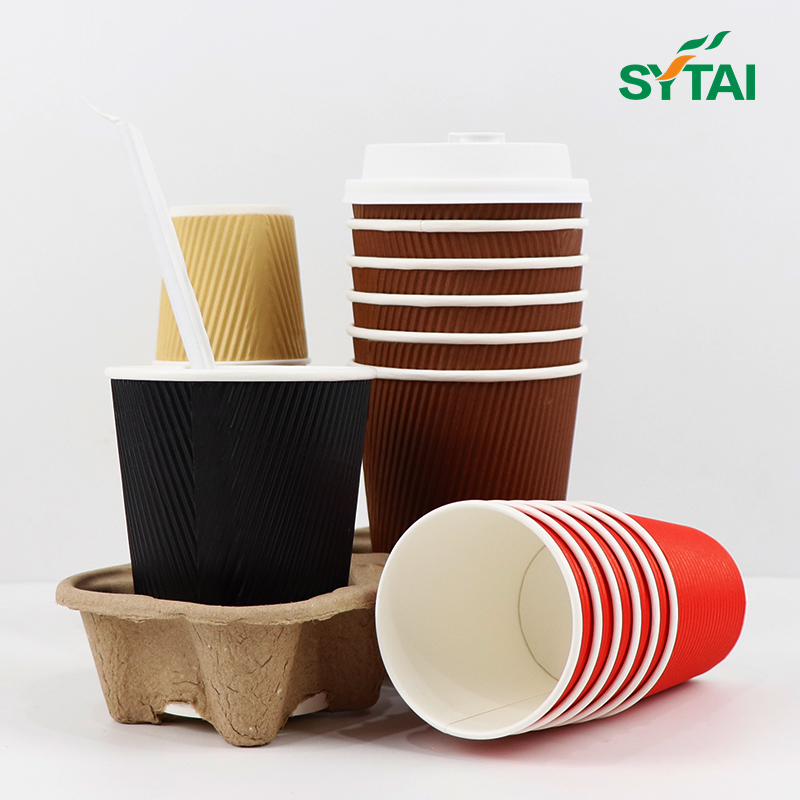
The result is a surface that rises and falls every few millimetres. On a flat-wall cup, a print roller meets a plane. On a ripple cup it meets a series of crests, and the ink film has to bridge them without starving the valleys. This is why a file that printed perfectly on a double wall cup can look patchy on a ripple body, and why the prepress stage on this product is longer than buyers expect.
The insulation logic behind that structure is covered separately in why ripple walls hold heat without a sleeve; this article stays on the printing.
SYTAI prints these cups by flexography in up to seven colours, CMYK or matched to a Pantone reference, using water-based inks on kraft or white board. Before plate-making, artwork is reviewed against the embossing: very fine hairlines and small type set across the ripple crest tend to break up, so those elements are moved onto the flat bands and a revised file is returned for approval. Nothing goes to plate until that revision is signed off.
Three Artwork Errors That Trigger A Reprint
- Fine type on the crest. Small text — legally required text especially — loses definition where the surface curves away from the plate. Move it to a flat band, or enlarge it.
- Hairline rules and thin logo strokes. The thinnest elements are the first to break. Ask for a proof at 100 % scale, not a screen mock-up.
- Compliance marks placed late. Recycling marks, material abbreviation and lining type are part of the design, not a sticker added afterwards. Deciding their position during design costs nothing; retrofitting them costs a plate.
The Lining Choice Is a Compliance Decision, Not Just a Price Line
Three linings are available on the same cup body, and the choice is usually made on price when it should be made on market:
- PE — the lowest-cost moisture barrier and the default for hot coffee. Proven, widely accepted, not plastic-free.
- Water-based coating — plastic-free and repulpable, which suits brands facing packaging-waste rules or retailer questionnaires.
- PLA — plant-based, industrially compostable to EN 13432. The option most often requested by chains with a published sustainability target, but it needs industrial composting conditions; it is not a home-compostable product and should not be marketed as one.
- Two practical points buyers miss. First, the lining type is printed on the cup — on the base or the side wall — so the decision has to be locked before artwork approval, not after.
Sleeve Economics: Compare Total Cost, Not Unit Price
The commercial case for a ripple wall is not "better cup". It is the removal of a second SKU — the sleeve — from every bar, store room and delivery.
| Cost line | Single wall + sleeve | Double wall | Ripple wall |
|---|---|---|---|
| Cup unit cost | Lowest | Medium | Medium-high |
| Sleeve unit cost | Added per drink | None | None |
| Sleeve storage / reorder | Yes | No | No |
| Labour at peak | Sleeving seconds | No | No |
| Double-cupping when too hot | Common | Rare | Rare |
| Hand comfort | Poor without sleeve | Good | Best |
| Print surface for logo logo | Flat, easy | Flat, easy | Embossed, needs prepress |
MOQ, Plate Cost and the Carton Cube for Wholesale Buyers
| Size | Body dimension (mm) | Pcs / carton | Carton (cm) | CBM / carton* | Pcs / m³* |
|---|---|---|---|---|---|
| 8 oz | 80 × 56 × 92 | 500 | 41 × 33 × 44 | 0.060 | 8,400 |
| 10 oz | 90 × 60 × 95 | 500 | 46 × 37 × 39 | 0.066 | 7,530 |
| 12 oz | 90 × 60 × 110 | 500 | 46 × 37 × 46 | 0.078 | 6,390 |
| 16 oz | 90 × 60 × 132 | 500 | 46 × 37 × 53 | 0.090 | 5,540 |
| 20 oz | 90 × 60 × 152 | 500 | 46 × 37 × 59 | 0.100 | 4,980 |
| 22 oz | 90 × 60 × 168 | 500 | 46 × 37 × 65 | 0.111 | 4,520 |
* CBM and pieces per cubic metre are calculated from the carton dimensions on the specification sheet, for volume estimation only. Confirm actual loading with your forwarder — palletisation and container stuffing reduce usable cube.
The column that matters is the last one. A 22 oz cup occupies nearly twice the freight volume per piece of an 8 oz cup, so a mixed container priced on a single average freight rate per cup will be wrong in one direction or the other. Build the freight line per size, then add it back into the landed cost before comparing suppliers.
Where Printed Ripple Cups Pay Off
Specialty coffee and roasteries. The ribbed body reads as craft rather than commodity, and the cup can carry a full-colour identity without a sleeve hiding it.
Drive-thru, kiosks and event bars. Grip matters when a customer takes the cup one-handed through a window or across a crowd. The corrugation is functional, not decorative.
Hotel, airline and corporate catering. One SKU replaces cup-plus-sleeve, which simplifies procurement and bin storage across sites.
Chains with a published sustainability target. Water-based or PLA lining plus FSC-certified paper gives a defensible story — provided the lining claim matches the disposal route actually available in that market. If you are comparing compostable substrates across the range, the same certification logic applies to compostable straws and PLA versus paper.
FAQ
What is the difference between ripple wall and double wall cups?
Double wall is two flat layers with one air gap. Ripple wall adds a corrugated layer that forms many small air chambers: better insulation, higher rigidity, a ribbed grip, and an outer surface that has to be artwork-adjusted before printing.
Double wall is two flat layers with one air gap. Ripple wall adds a corrugated layer that forms many small air chambers: better insulation, higher rigidity, a ribbed grip, and an outer surface that has to be artwork-adjusted before printing.
Can I print my logo in Pantone colours?
Yes — up to seven colours by flexography, CMYK or matched to a Pantone reference, with water-based inks on kraft or white board.
Yes — up to seven colours by flexography, CMYK or matched to a Pantone reference, with water-based inks on kraft or white board.
What is the minimum order for custom printed ripple cups?
50,000 pieces per size and per design. Mixed sizes can ship in one container, and plates can be shared across sizes within the same design.
50,000 pieces per size and per design. Mixed sizes can ship in one container, and plates can be shared across sizes within the same design.
Do the cups come with lids?
Lids are a separate item. 10 oz, 12 oz and 16 oz share a 90 mm rim; the 8 oz uses an 80 mm body and needs the matching lid confirmed before volume ordering.
Lids are a separate item. 10 oz, 12 oz and 16 oz share a 90 mm rim; the 8 oz uses an 80 mm body and needs the matching lid confirmed before volume ordering.
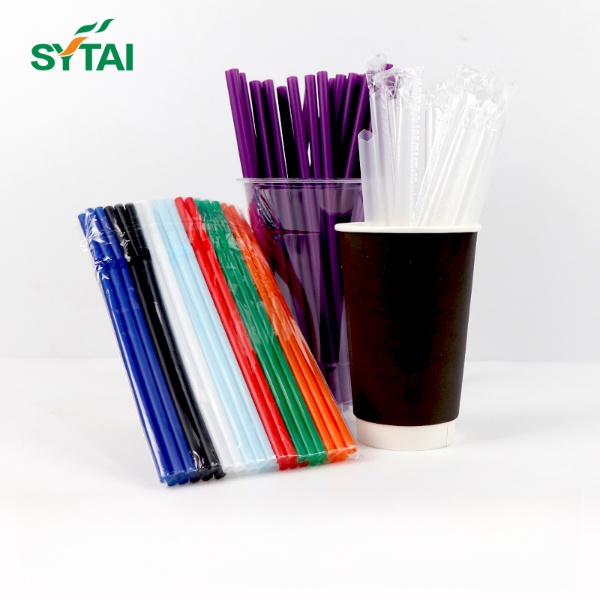
Industry News - November 21, 2026
Compostable Straws: PLA vs Paper, Bulk Cost & Buying Guide
Compare compostable straws, PLA and paper on strength, composting standards and bulk cost. 4-12 mm sizes, 5,000 per carton, MOQ 100,000, factory direct.
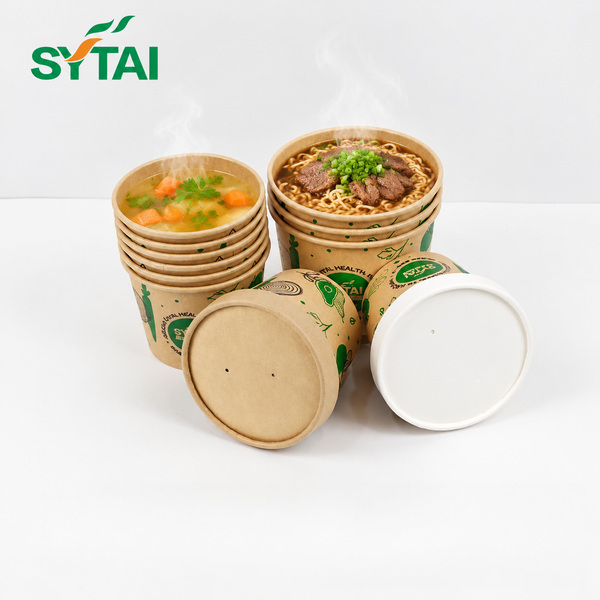
Industry News - November 17, 2026
Paper Soup Containers With Lids: A Catering Buyer's Guide to Fewer Leaks and Lower Cost per Serving
This guide is written from the perspective of the front lines of production, not from a product catalog. It covers exactly where leakage begins, three sets of figures worth comparing before even looking at price, and how to build a coverage strategy that remains robust despite staff turnover.

Industry News - November 13, 2026
Paper Ice Cream Cups: Sizes, Lids & Wholesale B2B Guide
Leaking bases, cracked rims, popping lids: a spec-level guide to paper ice cream cups - sizes, coatings, carton cube, freight math and printing.