


123123123
 123123123


Supporting the "Plastic Ban": A Selection Guide for Biodegradable/Corn Starch Food Containers
2026-07-10
123123123
With the advancement of "Dual Carbon" goals and the full implementation of the updated "Plastic Restriction Order," eco-friendly packaging has shifted from a "bonus feature" to a "must-have" in the food service supply chain.
Industry data indicates that the market size for biodegradable food containers in China is set to surpass the 10-billion-yuan mark by 2025, maintaining a compound annual growth rate (CAGR) of over 20%.
In this burgeoning market, bio-based biodegradable containers—particularly those made from corn starch—have become the preferred choice for chain restaurants, fresh food e-commerce platforms, and high-end takeout providers, thanks to their natural origins and ability to return to nature.
However, the market is rife with "pseudo-degradable" products and manufacturers of varying capabilities. Identifying a genuine source supplier with strong R&D, reliable production capacity, and proper compliance credentials has become a major challenge for procurement teams.
Industry data indicates that the market size for biodegradable food containers in China is set to surpass the 10-billion-yuan mark by 2025, maintaining a compound annual growth rate (CAGR) of over 20%.
In this burgeoning market, bio-based biodegradable containers—particularly those made from corn starch—have become the preferred choice for chain restaurants, fresh food e-commerce platforms, and high-end takeout providers, thanks to their natural origins and ability to return to nature.
However, the market is rife with "pseudo-degradable" products and manufacturers of varying capabilities. Identifying a genuine source supplier with strong R&D, reliable production capacity, and proper compliance credentials has become a major challenge for procurement teams.
Disposable biodegradable tableware
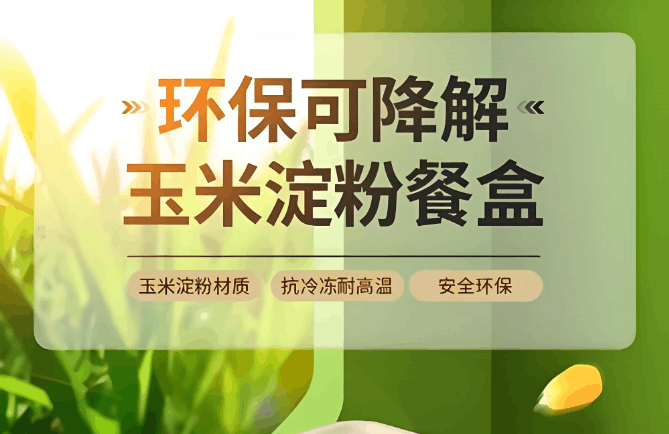
Among the various alternatives, corn starch food containers are increasingly becoming the top choice for food service enterprises. They are manufactured using natural corn starch as the primary raw material, which undergoes modification and plasticization before being blended with biodegradable resins.
Under industrial composting conditions, corn starch containers can degrade by over 90% within 180 days, ultimately breaking down into carbon dioxide, water, and mineralized inorganic salts—truly achieving a resource closed-loop of "from the field, back to the field." In terms of performance, high-quality corn starch containers can withstand freezing temperatures down to -20°C without cracking, are microwave-safe, and can support loads of up to 6 kg without deforming.
Driven by both policy mandates and market demand, selecting corn starch containers that are truly compliant, safe, and reliable has become an urgent priority for food service businesses.
Under industrial composting conditions, corn starch containers can degrade by over 90% within 180 days, ultimately breaking down into carbon dioxide, water, and mineralized inorganic salts—truly achieving a resource closed-loop of "from the field, back to the field." In terms of performance, high-quality corn starch containers can withstand freezing temperatures down to -20°C without cracking, are microwave-safe, and can support loads of up to 6 kg without deforming.
Driven by both policy mandates and market demand, selecting corn starch containers that are truly compliant, safe, and reliable has become an urgent priority for food service businesses.
Biodegradable food containers 【Purchasing Guide】
🛡️ Practical Tips to Avoid Common Pitfalls
Beware of "Concept Hype": There is a fundamental difference between genuine bio-based biodegradable materials (such as corn starch or PLA) and ordinary "photo-oxidative degradable" plastics or "starch-filled plastics." When purchasing, be sure to request a third-party test report to confirm that the degradation method is "fully biodegradable."
Verify company credentials: Legitimate manufacturers typically display their patent certificates and honors on business information platforms like Qichacha or Tianyancha.
Inspect production capacity on-site: For large, long-term orders, visiting the factory in person is recommended. Established, capable manufacturers possess levels of automation and raw material reserves that small workshops simply cannot match.
Pay attention to physical properties: Do not focus solely on eco-friendly metrics. High-quality cornstarch food containers should be heat-resistant (withstanding temperatures >90°C), oil- and water-proof, and structurally rigid enough to resist collapsing; otherwise, leakage during actual use could negate the product's benefits.
Biodegradable food containers 【FAQs】
Q: Can bio-based biodegradable tableware really degrade completely?
A: Yes, but specific conditions are required. Taking cornstarch containers as an example, under industrial composting conditions (specific temperature, humidity, and microbial environments), they can fully decompose into water, carbon dioxide, and organic matter without leaving behind microplastic residues.
A: Yes, but specific conditions are required. Taking cornstarch containers as an example, under industrial composting conditions (specific temperature, humidity, and microbial environments), they can fully decompose into water, carbon dioxide, and organic matter without leaving behind microplastic residues.
Q: Can this type of tableware be heated in a microwave?
A: Some products can. Those made using food-grade cornstarch and heat-resistant processing techniques are microwave-safe, though it is advisable to check the product labeling before use.
A: Some products can. Those made using food-grade cornstarch and heat-resistant processing techniques are microwave-safe, though it is advisable to check the product labeling before use.
Q: Why is bio-based tableware more expensive than ordinary plastic?
A: This is primarily due to higher raw material costs and more complex production processes. However, costs are gradually decreasing as technology advances and the market expands.
A: This is primarily due to higher raw material costs and more complex production processes. However, costs are gradually decreasing as technology advances and the market expands.
Choosing cornstarch-based food containers is not merely a matter of legal compliance; it reflects a commitment to consumer health and environmental stewardship.
Sytai stays at the forefront of trends and standards in green packaging, dedicated to providing foodservice businesses with professional, reliable guidance on product selection and supply chain solutions. We look forward to partnering with those committed to green development as we shape a sustainable future together in the era of plastic restrictions.
For more details on our products and selection solutions, please feel free to contact the Sytai team—your sustainable packaging manufacturer.
Industry News - October 06, 2026
How to Choose a Takeaway Noodle Box
A comprehensive guide to materials, sizes, and purchasing—covering everything from material types and dimensions to custom printing and supplier evaluation.
Industry News - September 28, 2026
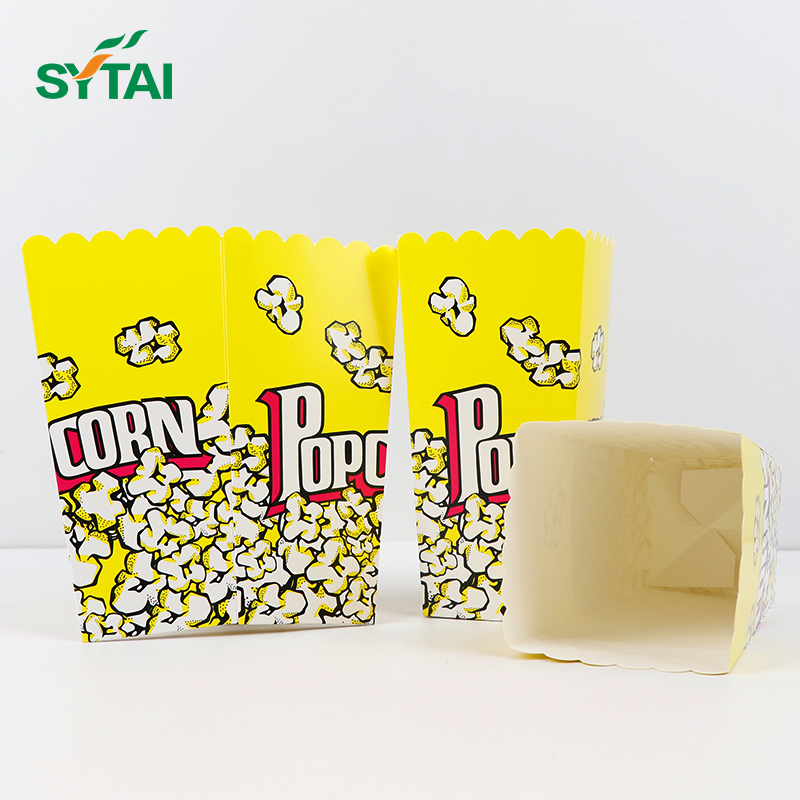
Custom Popcorn Buckets: A Guide to Choosing Packaging
From materials, dimensions, and printing to supplier selection, we help you fully clarify the procurement process for custom popcorn buckets.

Industry News - September 24, 2026
Analysis of China's Paper Tableware Export Share in 2026
An in-depth look at China's paper tableware export share in 2026, including an analysis of export destinations and industry development trends.